min read
September 16, 2026
Best Halal Office Snacks for Your Pantry
Dive into the world of halal office snacks, the dietary guidelines for Islam, with our guide to top brands, categories, symbols, and holidays.

Key Takeaways
- Learn what makes a snack halal and how to spot certifications like IFANCA, ISWA, and Halal Transactions of Omaha on office snack packaging.
- Discover halal snacks and brands your team already loves, including pantry staples like SkinnyPop, Justin's, and Larabar.
- Plan for key Islamic occasions throughout the year with halal-friendly picks that create a more inclusive workplace experience.
Why Your Pantry Needs Halal Office Snacks
A great office snack program gives more employees something they can enjoy. That means building an assortment around the dietary needs and preferences that show up across your workplace, including halal.
Building a more inclusive pantry means understanding the different needs across your workforce and making them easier to accommodate. For employees who follow halal dietary guidelines, having the right options available can make the pantry feel more thoughtful, welcoming, and reflective of the people using it every day.
In this guide, we’ll break down what halal means, how to identify halal-certified products, common misconceptions to know, halal snacks and drinks to consider for your pantry, and important Islamic occasions to keep on your workplace calendar.
What is Halal
As always, we want to acknowledge there are multiple schools of thought and interpretation within Islamic dietary law. Here's the basic rundown of halal (an Arabic word meaning "permissible") so you have a starting point.
Halal: A set of dietary guidelines rooted in the Quran that determine what foods and drinks are permissible for Muslims to consume, and how those foods must be prepared. The opposite term is haram, meaning "forbidden."
Want to dig deeper? These organizations offer additional guidance on halal foods, ingredients, certification, and standards:
Halal Animals and Meat
Halal rules govern both which animals can be eaten and how they're slaughtered.
Examples of items that are halal:
- Beef
- Chicken
- Turkey
- Lamb and goat
- Most fish and seafood
Examples of items that are NOT halal:
- Pork and any pork byproduct (including gelatin derived from pork)
- Carnivorous animals
Halal meat must also come from an animal slaughtered according to Islamic law (dhabihah), which includes a specific method and a blessing at the time of slaughter. This is why halal certification on packaged meat matters just as much as the animal itself.
No Alcohol
Halal guidelines prohibit alcohol entirely, including small amounts used as flavoring or extract in packaged food.
Gelatin and Cross-Contact
Gelatin is one of the most common hidden non-halal ingredients in snacks, since it's frequently derived from pork. Halal-certified gelatin exists (usually sourced from beef or fish), but if a product doesn't specify, it's worth checking the certification rather than assuming.
Understanding Halal Snack Package Labeling
Halal snacks are easy to identify once you know the certification mark to look for.
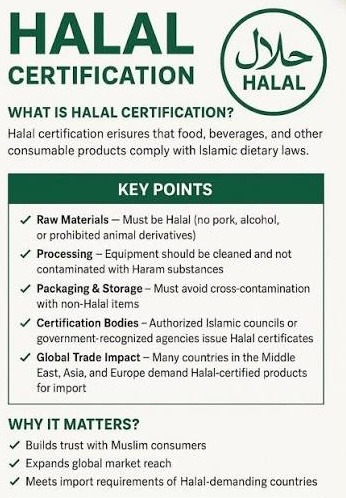
The mark itself is usually the Arabic word for "halal" (حلال) set inside a circle, shield, or seal, sometimes paired with the certifying body's name. In the US, the most recognized version comes from IFANCA (Islamic Food and Nutrition Council of America), but you may also see marks from other authorized Islamic councils or government-recognized certifying agencies, especially on imported products.
Common Misconceptions About Halal-Friendly Snacks
- Myth 1: Halal is only for Muslim consumers.
Not true. Many non-Muslim consumers choose halal products because they trust in production standards, or because halal overlaps with other dietary needs like vegetarian or allergen-conscious eating. - Myth 2: Halal means alcohol-free but otherwise unrestricted.
Halal also excludes pork and any pork byproduct, including gelatin, lard, and certain enzymes. Alcohol is just one piece of the standard. - Myth 3: Halal snacks are hard to find.
In reality, most vegan, plant-based, and fruit-based snacks are already halal-friendly by default. You likely have several in your pantry rotation already, from popcorn to hummus to fruit bars.
Halal vs. Halal-Certified vs. Halal-Friendly
- Halal-Certified: Verified by a recognized certification body to meet Islamic dietary law, typically marked with a symbol like IFANCA's crescent-M or ISWA.
- Halal-Friendly: Contains no obviously haram ingredients (no pork, no alcohol) but hasn't gone through formal certification. Some observant employees will avoid these unless certified.
- Zabiha Halal: A stricter standard specifically for meat, requiring the traditional slaughter method. Most packaged snacks and drinks won't carry this label since it applies to meat products specifically.
Good Halal-Friendly Snacks for Work (Updated in 2026)
You'd be surprised how many of your favorite office snacks are already halal-friendly, so you may already have a solid mix in your pantry.
Most of the picks below are halal-friendly rather than certified, meaning the ingredients contain nothing haram, but haven't gone through third-party halal certification. We've flagged the few that carry official certification.
Halal-Friendly Popcorn, Chips, and Pretzels
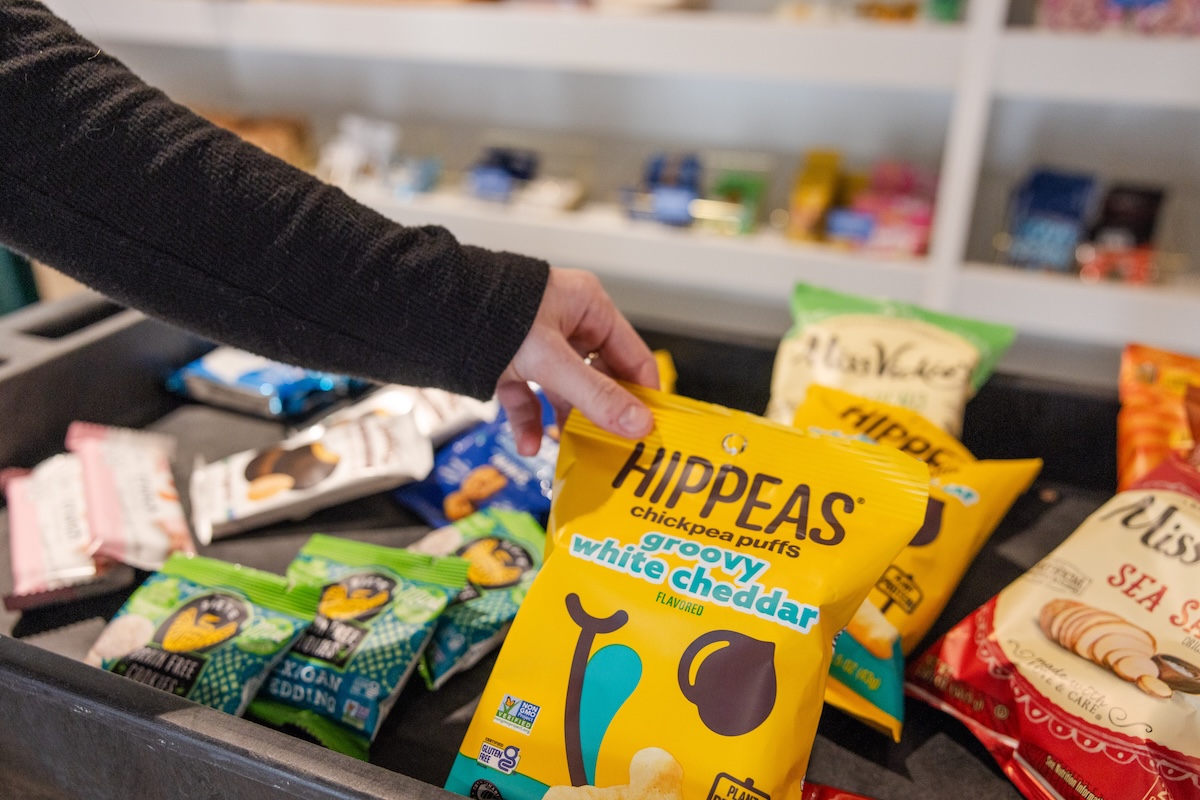
- HIPPEAS Chickpea Puffs, Vegan White Cheddar
- SkinnyPop Original Popcorn
- LesserEvil Organic Popcorn, Himalayan Pink Salt
- Sensible Portions Garden Veggie Straws, Sea Salt
- Stacy's Simply Naked Sea Salt Pita Chips
- H.K. Anderson Peanut Butter Filled Pretzel Nuggets
- Kettle Brand Potato Chips, Jalapeño
- LOVE CORN Sea Salt Crunchy Corn Snack
- Barnana Organic Ribbed Plantain Chips
Halal-Friendly Bars & Nut Butters
- Solely Fruit Jerky, Mango
- That's It. Apple + Blueberry Fruit Bar
- Justin's Classic Peanut Butter Squeeze Pack
- GoMacro MacroBar, Coconut + Almond Butter + Chocolate Chips
- That's It. Apple + Mango Fruit Bar
- Larabar Peanut Butter Chocolate Chip
- Justin's Classic Almond Butter Squeeze Pack
- Kirkland Signature Extra Fancy Mixed Nuts, Salted
Halal-Friendly Candy & Sweets
- Sour Punch Sour Punch Twists (Halal Certified)
- Loacker Classic Crispy Wafers, Hazelnut (Halal Certified)
- MadeGood Foods Granola Minis, Strawberry
- MadeGood Foods Granola Minis, Chocolate Chip
- Nature's Bakery Whole Wheat Fig Bars, Strawberry
Halal-Friendly Refrigerated Snacks
- MUSH Blueberry Ready-to-Eat Oats
- MUSH Vanilla Bean Ready-to-Eat Oats
- Mylk Labs Blueberry Maple Oatmeal Cup
- Wholly Guacamole Classic Guacamole Mini Cups
- Sabra Classic Hummus Singles
Halal-Friendly Office Drinks
- Swoon Half Iced Tea & Half Lemonade
- Oatly Original Oat Milk
- Hint Watermelon Fruit-Infused Water
- CELSIUS Sparkling Watermelon Energy Drink
- Wandering Bear Coffee Straight Black Cold Brew
- OWYN Protein Shake, Smooth Vanilla or Chocolate
- La Colombe Oatmilk Draft Latte, Vanilla
How To Celebrate Islamic Occasions At Work
Food plays a meaningful role in several Islamic observances throughout the year. Here's how to bring a few of the most widely observed ones into your office pantry program.
Ramadan
Ramadan is a month of fasting from dawn to sunset, observed once a year based on the lunar calendar. Employees observing Ramadan won't be eating during work hours, but the fast breaks each evening with iftar, often starting with dates and water.
Consider stocking dates and water options ahead of the month so employees have what they need to break their fast if they're staying late. It's also worth having a few higher-protein options on hand, since these help with staying full through a long fast the next day, especially for anyone eating a later iftar or suhoor before dawn.
Eid al-Fitr
Eid al-Fitr marks the end of Ramadan and is one of the two major Islamic holidays. It's a celebratory occasion centered on food, family, and sweets.
Bringing in a spread of dates, nuts, and halal-certified sweet treats for the office is an easy way to acknowledge the holiday.
Eid al-Adha
Eid al-Adha, the "Festival of Sacrifice," falls about two months after Eid al-Fitr and is traditionally marked by sharing meals, often meat-based, with family and community.
For the office, this is a good moment to highlight halal-friendly snacks in your pantry rotation and acknowledge the holiday in team communications.
FAQ
- What office snacks are halal?
Many familiar office favorites are already halal, including SkinnyPop Popcorn, Justin's Nut Butters, Larabar, and most fruit- and vegetable-based snacks. Check packaging for a certification symbol like IFANCA or ISWA to confirm. - What makes a snack not halal?
The most common disqualifiers are pork or pork byproducts (including gelatin), alcohol, and meat that wasn't slaughtered according to Islamic law. Plant-based and dairy snacks without alcohol-based flavoring are typically halal by default. - What do halal symbols on packaging mean?
Symbols like the IFANCA crescent-M or ISWA indicate a recognized certification body has verified the product meets Islamic dietary standards. This is especially important for meat products and anything with gelatin. - Is halal the same as vegetarian or vegan?
No. Halal refers to a set of dietary guidelines, while vegetarian and vegan describe which animal products a diet includes. Halal foods can contain meat, dairy, or eggs, as long as they meet halal requirements. There can be overlap. Many vegetarian and vegan snacks are halal-friendly because they avoid ingredients like pork and pork-derived gelatin. But one label doesn’t guarantee the other. Alcohol-based flavorings and other ingredients can still affect whether a product is halal, so it’s always best to check the label or look for halal certification.
Related Resource
Blog
Best Halal Office Snacks for Your Pantry
September 16, 2026
Blog
Snacky Hour Episode 1 Recap: Mezcla, LatinX-Owned Protein Bars
September 15, 2026

Blog
Data Bites: Which Companies Are Spend Most on Office Pantry Programs in Q2 2026?
September 15, 2026

Blog
Best California Snack and Coffee Brands to Stock in Your Office Pantry
September 10, 2026
Blog
Office Equipment Guide: Drip Coffee Machines for the Office
September 10, 2026
Blog
Celebrate Halloween at Work: Breakroom Snacks, Activities, Decor, & More
September 9, 2026

Blog
October Holidays for Work: Breakroom Snack Celebrations
September 9, 2026

Blog
Best Chicago Snack and Coffee Brands to Stock in Your Office Pantry
September 2, 2026

Blog
Office Snack Scoop Episode 1 Takeaways: Fiber, Flavormaxxing, and the Beverage Boom
September 1, 2026