min read
September 15, 2025
How to Build an Equitable Employee Experience
Quick guide to building an office pantry program that makes employees at every location feel like a priority.

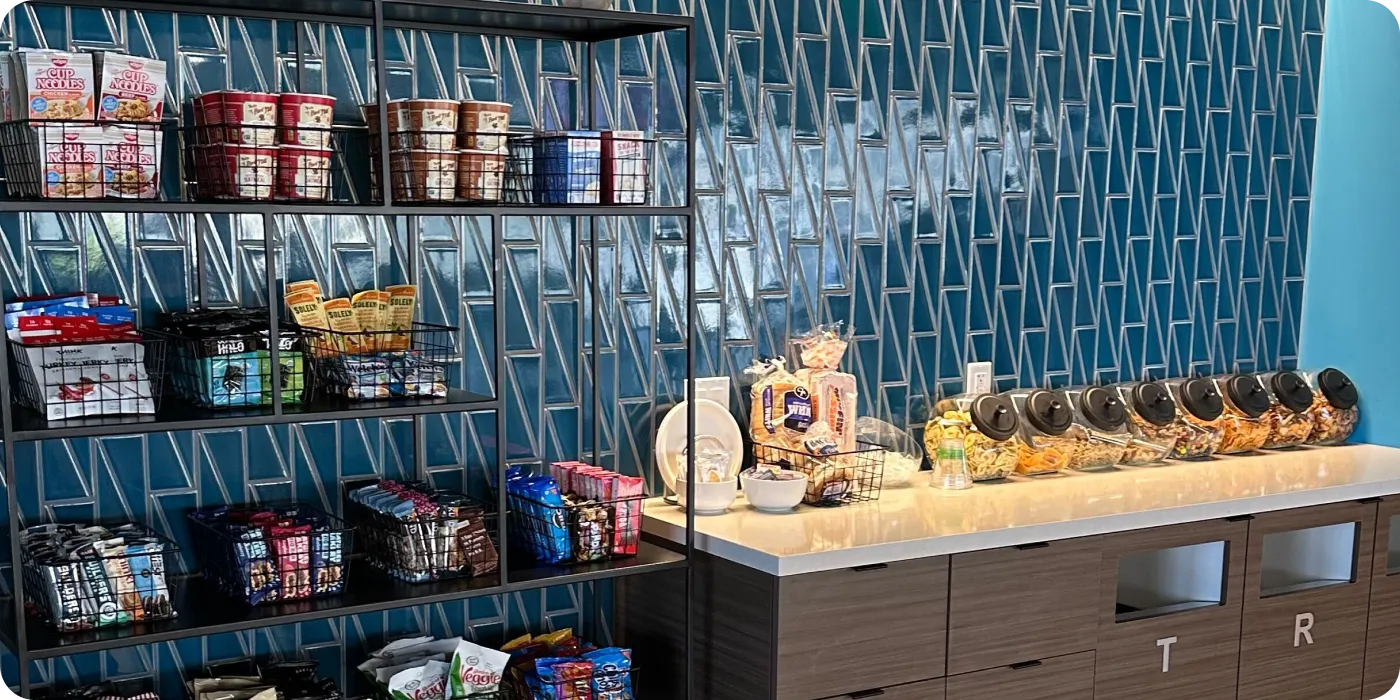
If one of your offices is enjoying wellness treatments and catered lunches while another is left with tap water and luck, that's a clear sign something's off. The traditional office setup is changing to a more flexible Hub and Spoke model, reflecting how people work today. But it's not just about rearranging spaces; it's also about rethinking how perks and experiences are spread across different locations. Consistency matters. As companies embrace this new approach, ensuring everyone gets the same level of personalization isn't just a nice-to-have — it's vital for keeping employees happy and bringing in new talent.
The easiest place to channel the commitment to equity across office locations is in the kitchen—the watering hole for employee interaction and rejuvenation. It allows you to not only provide essential amenities but also create an environment where every employee feels valued and respected. From ensuring dietary inclusivity to accommodating diverse preferences in kitchen design and equipment, every decision reflects a dedication to fostering a sense of belonging for all employees.
“Workplaces want cohesive experiences across their offices while providing local customization. For example, each office may have cold brew kegs, but the brew is tailored to that location."
Emma Waterman, Director of Implementation at Crafty
However, achieving equity in perks requires more than just offering the same set of amenities across different locations. It demands a strategic approach to budgeting and resource allocation. Maximizing your workplace food and beverage investment involves developing a streamlined budget formula that considers various factors, such as headcount, product visualization, delivery frequency, service level, and equipment.
Here, we offer a quick guide to building an office pantry program that makes employees at every location feel like a priority.
Know Your Budget

First thing’s first, you need to know your budget. Whether you control the purse strings or you have a set amount assigned to you by your finance team, understanding how much you have for office food and beverages is crucial. Without this awareness, you risk overspending, shortages, and more
The experts at Crafty have developed a foolproof formula for formulating the perfect pantry budget:
- Estimate Daily Headcount: Determine the number of employees in the office each day to forecast orders, restocks, and deliveries effectively.
- Visualize Your Daily Spend: Crafty allows you to set pricing tiers per employee, helping you visualize your budget and understand its reach with your product selection.
- Set Delivery Frequency: Align your delivery schedule with the busiest office days to optimize inventory management.
- Delegate the Heavy Lifting: In smaller, more “amenitized” spaces, workplace teams often take on extra responsibilities. Central management within an easy platform extends the teams' bandwidth while prioritizing program quality and optimization.
Check out the office pantry budget formula >
Standardize National Office Pantry Offerings
Establish a core set of consistent pantry offerings across all office locations. This can include staple food items, beverages, and snacks catering to diverse dietary preferences and cultural backgrounds. By standardizing pantry offerings, employees in different cities can enjoy similar experiences and access to amenities.
Tailor to Local Preferences
While maintaining consistency in core offerings, allow regional customization to accommodate local preferences and cultural differences. This could involve incorporating locally sourced office snacks or beverages popular in specific cities or regions. By embracing regional diversity, you demonstrate an understanding and appreciation for the unique characteristics of each location.
Regular Feedback Mechanisms
Implement feedback mechanisms to gather input from employees in different cities regarding their pantry preferences and experiences. This could include surveys, suggestion boxes, or regular meetings with pantry users. By soliciting feedback and actively listening to employee input, you ensure that pantry offerings are responsive to the needs and preferences of each location.
Rotating Specialties
Introduce rotating specialty items or themed offerings highlighting different cultural cuisines or culinary trends. This could involve featuring a "Taste of the World" theme where employees can sample new brew at the office coffee station or test out snacks or beverages from different countries or regions. By rotating specialty offerings, you create excitement and variety while celebrating diversity in the office pantry.
Accessibility and Inclusivity
Ensure that corporate pantry amenities are accessible to all employees, regardless of dietary restrictions, allergies, or cultural preferences. This may involve labeling allergens, providing vegetarian, vegan, and gluten-free snacks, and accommodating religious dietary restrictions. By prioritizing accessibility and inclusivity, you create a welcoming and supportive environment for all employees.
Conclusion
In conclusion, scaling an equitable employee experience in a Hub and Spoke model requires careful consideration of various factors, from standardizing office amenities to adapting perks for remote or hybrid work settings. By prioritizing equity in the employee experience, organizations can create a more cohesive and inclusive workplace culture that resonates with employees across different locations and work arrangements.
Related Resource

Blog
Office Pantry Services in Texas: How Crafty Is Growing Across Dallas, Austin & Houston
October 15, 2026

Blog
What Makes Fruit “Office-Ready”? From Farm Selection to Delivery Standards
October 15, 2026
Blog
The Procurement Guide to Evaluating Office Pantry Providers
October 14, 2026

Blog
Equipment Guide: Sparkling Water Machines for the Office
October 14, 2026

Blog
Best Organic Office Snacks: What to Stock and How to Read the Labels
October 13, 2026

Blog
Data Bites: Office Pantry Spend Per Employee by Industry in 2026
October 13, 2026
Blog
Inside Office Digest: How Crafty Measures Office Pantry Program Performance
October 12, 2026
Blog
Equipment Guide: Cold Water Machines for the Office
October 8, 2026
Blog
How to Reduce Office Pantry Costs with 7 Optimization Tips
October 8, 2026
Blog
November Holidays for Work: Snack Celebrations for Your Breakroom
October 8, 2026