min read
April 8, 2026
Data Bites: The Rise of Protein at Work
Market trends and Crafty insights driving the rise of protein in office break rooms.

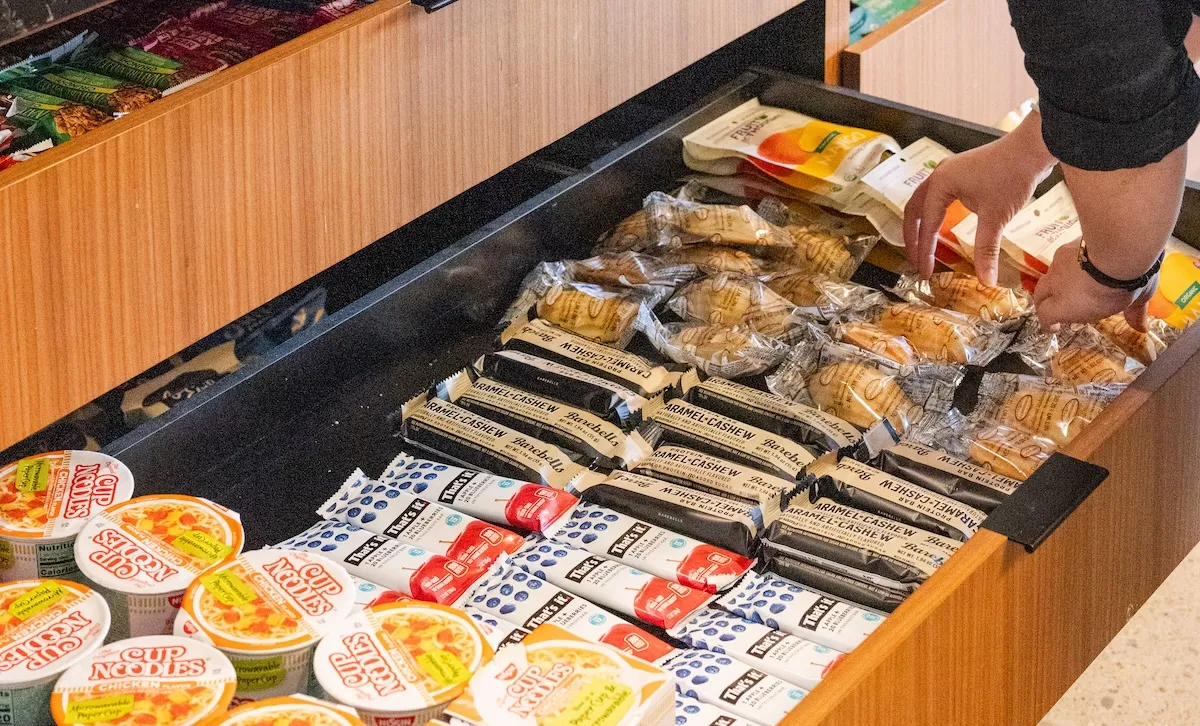
AI is accelerating expectations. Work requires longer stretches of focus. At the same time, GLP-1 medications are shifting how much people consume and how intentional they are about it. Employees are no longer snacking out of habit. They are choosing high-protein office snacks to help them keep up.
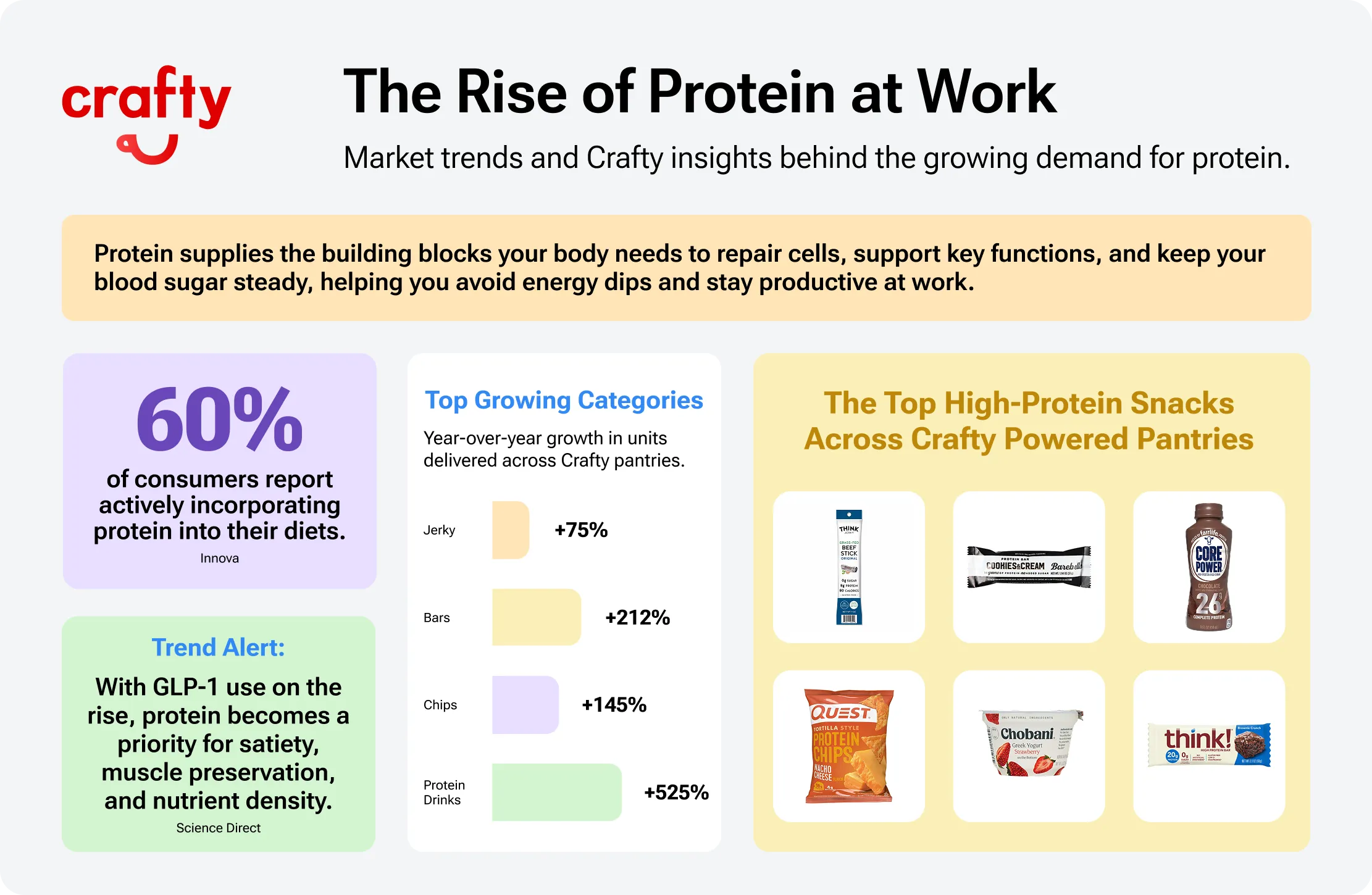
Today, 60% of consumers report actively trying to increase their protein intake. Inside Crafty-powered workplaces, that behavior is already showing up in the workplace pantry data. As employees eat less and expect more from what they consume, protein is no longer a premium option. It is becoming the baseline.
Why Protein Matters for Work Performance
Protein can directly impact how employees feel and perform throughout the day.
- Stabilizes energy by slowing digestion and helping regulate blood sugar, which reduces the spikes and crashes that lead to mid-day fatigue
- Supports focus and cognitive function by contributing to neurotransmitter production, which plays a role in attention, memory, and mental clarity
- Increases satiety by helping employees feel full longer, reducing constant snacking and distraction during work blocks
- Delivers more value per bite by supporting muscle, metabolism, and overall function, especially as employees consume fewer total calories
The Categories Driving Protein Growth
Across Crafty-powered pantries, protein is infiltrating employees’ existing routines.
This is not about introducing entirely new behaviors. It is about upgrading the ones already in place. Morning coffee is becoming a protein delivery moment. Midday snacks are being re-evaluated for function. Even lunch is being supplemented with higher-protein add-ons. At the same time, employees are eating less overall, which is raising the bar for what each item needs to deliver.
These are the categories where high-protein products are gaining the most traction:
- Protein drinks (+525%) are surging as employees incorporate them into existing routines, often replacing office coffee creamers with options that deliver both caffeine and protein in one step
- Protein bars (+212%) continue to scale, with growing demand for higher-protein options (20g+) used to support mid-morning and mid-afternoon energy
- Protein chips (+145%) are gaining traction as a functional snack upgrade, commonly added to lunch to increase overall protein intake
- Jerky (+75%) saw major growth over the past year and is now holding steady as a pantry staple, with most workplaces maintaining at least one option due to consistent demand
The Top 5 High-Protein Office Snacks in Q1 2026
These are the products employees are consistently choosing, based on Crafty's proprietary workplace pantry data.
- Fairlife Chocolate Protein Shake (26g protein) delivers high protein with low sugar in a format employees use as a quick reset or meal replacement
- Barebells Cookies & Cream Protein Bar (20g protein) combines strong taste with high protein, making it one of the most repeat-consumed bars
- think! Brownie Crunch High Protein Bar (20g protein) offers zero sugar with a balanced macro profile, designed to avoid energy spikes
- Quest Nacho Cheese Protein Chips (18–19g protein) provide a savory, low-carb alternative to traditional chips without sacrificing familiarity
- Think Jerky Original Beef Jerky (10g protein) delivers lean protein in a small format that supports satiety, especially in GLP-1-influenced office pantries
- Chobani Greek Yogurt (12–15g protein) remains a staple, combining protein and carbs for a balanced option that anchors breakfast and mid-morning consumption
Turning Protein Insights Into Smarter Pantry Strategy
The opportunity is not just to add more products. It is to read how employees engage with protein and use that behavior, along with your data, to guide smarter assortment, placement, and spend.
If you are looking to build a stronger protein assortment, here is where to start and how to approach it:
- Start with yogurt at breakfast. It is cost-effective, high-frequency, and easy to test. Begin with variety packs, then consolidate into top-performing flavors once you see consistent demand.
- Introduce protein shakes strategically. As these are a more premium item, focus availability in the morning or high-demand windows to control pantry spend.
- Build your protein bar set with intention. Anchor your assortment with 20–30g bars that can function as meal replacements, then layer in additional options only if they show steady movement.
- Add jerky and protein chips to support lunch. These work best as add-ons, so watch how they move alongside meal items and adjust quantities and flavor offerings based on performance.
Conclusion
As expectations rise and consumption becomes more intentional, every item in the office break room is being evaluated for its role. The programs that perform best will not be the ones with the most options, but the ones that align closely with real behavior. When high-protein snacks are used intentionally, they support focus, stabilize energy, and help employees show up consistently throughout the day.
Dive into the latest workplace pantry data inside the Pantry Intelligence Index.
Related Resource
Blog
Fueling the Season: Inside a Pro Sports Organization's Workplace Food Program
October 7, 2026
Blog
The Insider's Guide to Choosing a National Office Coffee Service Provider in 2027
October 6, 2026
News
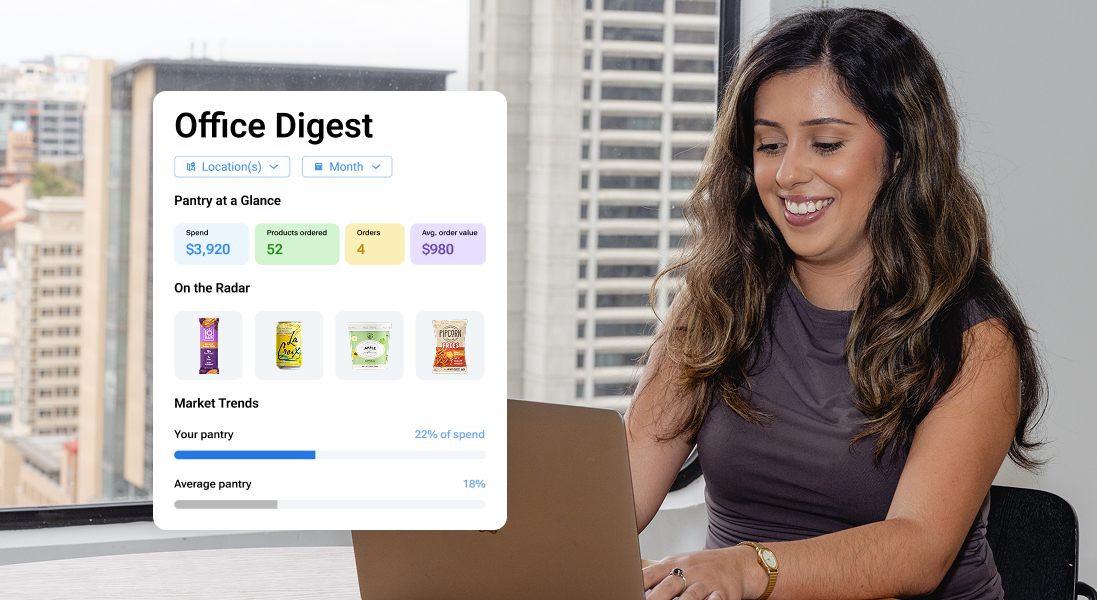
Crafty Launches Office Digest, the Industry's First Monthly Intelligence Report for Workplace Food Programs
October 5, 2026
Blog
Healthy Office Snacks: 50+ Picks Employees Actually Want
October 5, 2026
Blog
Equipment Guide: Hot Water Machines for the Office
October 2, 2026
Blog
4 Office Pantry Budget Lessons to Know Before Finance Comes Calling
October 2, 2026
Blog
Snacky Hour Episode 2 Recap: ITO EN Japanese Tea and Matcha
September 30, 2026
News
As the Fight for Talent Intensifies, New Data Shows Office Pantry Investment Holding Strong
September 30, 2026
Blog
7 Ways to Use Employee Voting to Build a Better Office Pantry
September 29, 2026