min read
January 7, 2026
Office Pantry Must-Haves for a Successful 2026
These four must-haves are what it takes to win with your office pantry program in 2026.

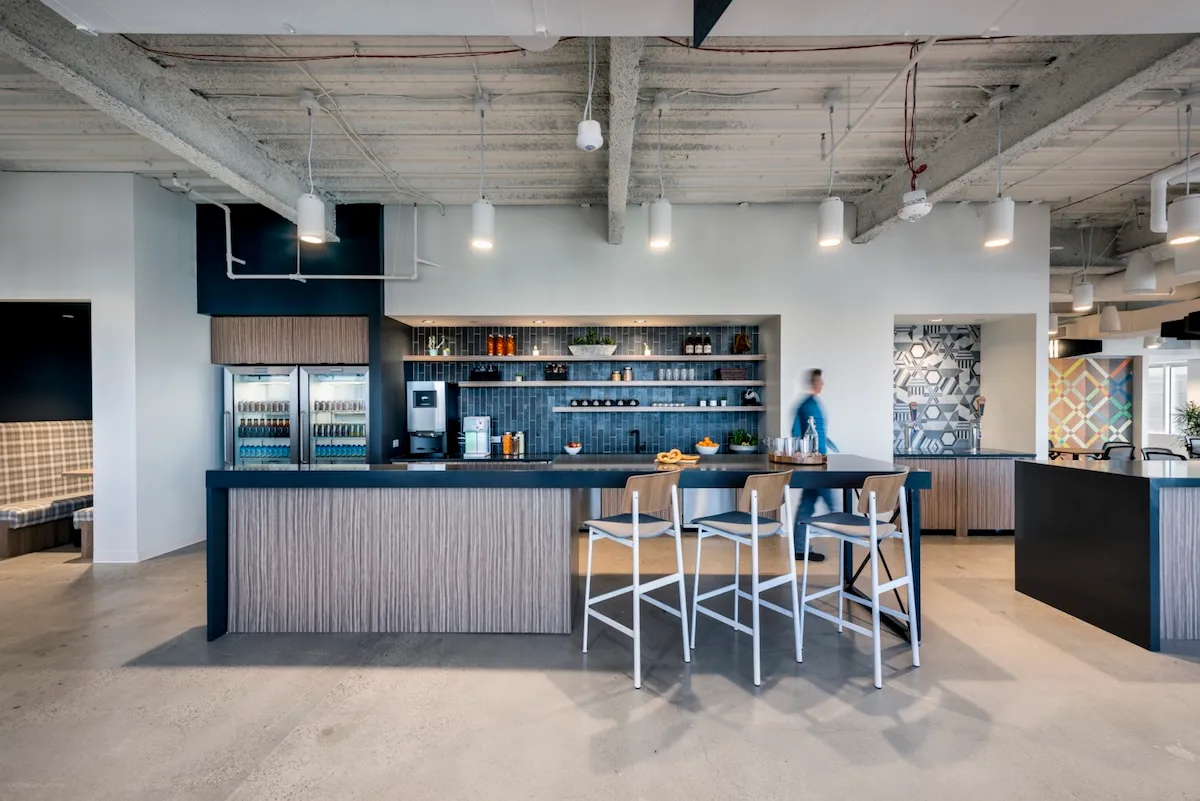
If you’re treating your office pantry the same way you did a few years ago, 2026 is going to expose it fast.
Budgets are tighter, and leadership wants clearer justification for every workplace investment. At the same time, employees are showing up with higher expectations around wellness, ingredients, and snacks that actually support energy and focus, not just something to grab on the way to a meeting.
Pantry programs can’t afford to be reactive. If you’re waiting until the invoice lands to understand spend, guessing what to order each week, throwing out expired products, or trying to solve gaps by adding more variety, costs will creep up fast, and leadership will start questioning the value of the program.
A successful pantry program in 2026 isn’t defined by how stocked it is. It’s defined by how well it runs. Let's see the four pantry must-haves that can make or break your year.
1. A Pantry Budget You Can Act On
If you want to have a successful start to 2026, you need more than just a budget number; you need a budget process that’s easy to act on.
In a year where every workplace investment is under scrutiny, a pantry budget only works if it helps you make smarter decisions in real time. Waiting until the invoice lands leaves you no room to actually do anything about it.
A successful pantry budgeting process has two key pillars:
- Your budget is visible at the point of decision
Whether you place orders yourself or your vendor does, your pantry order target needs to be visible during ordering, not buried in a spreadsheet or reviewed after invoices come in. At Crafty, we make sure the order budget target is visible on each order, with alerts when an order is trending over or under. That way, the person making the decision can adjust in the moment, knowing exactly what it means for the bottom line. - Your budget is easy to report on in real-time
If you’re piecing together invoices into your own spreadsheet, that is a red flag that things have got to change if you want to have a successful 2026. Good reporting answers your questions quickly and makes it easy to slice and dice your data to get exactly what you need. The less time you spend pulling information, the more time you have to analyze and make decisions that improve the program.
As office traffic flexes and financial scrutiny tightens, the pantry programs that stay on track are the ones with real-time budget visibility and reporting. That’s what keeps spend aligned to reality, keeps your program from becoming another cost center under pressure, and gives you the control to steer as conditions change. In 2026, pantry programs don’t fail because teams don’t have budgets. They fail because teams can’t act on them fast enough.
2. AI Enhancements to Gain Insights Faster
AI is changing every function in the workplace, and the office pantry is no exception.
The goal isn’t to replace people with AI (Battlestar Galactica gave us a nice preview of how that could turn out). It’s to help workplace teams move faster and make smarter decisions without getting stuck in manual work.
Remember, using AI does not automatically create better outcomes. If it’s fueled by bad information, missing context, or loose guardrails, it can just as quickly lead you in the wrong direction. If you want proof, just look at the recent vending machine experiment where an AI agent “lost” hundreds of dollars, gave away inventory for free, and ordered a live fish. YIKES.
We believe in using AI to equip experts to do their jobs better, faster, and with more confidence. For example, the Crafty Platform uses AI to help teams surface product insights faster, so workplace teams aren't wasting hours combing through spreadsheets, product lists, and invoices just to figure out what needs to change. Our AI-powered product swaps are designed to make product optimizations easier in two ways:
- Inside the inventory center, they surface low-performing products that are prime candidates for replacement based on what is not being consumed.
- They recommend similar alternatives that are more likely to perform, factoring in that office’s location, the products already in their pantry, and the budget targets for the program.
The best pantry programs in 2026 will use AI to cut time, not cut expertise. And for Crafty, this is only the beginning. We’re building what’s next to help workplace teams run smarter, faster, and with even more control.
3. Waste Prevention Built into the Program
Pantry waste is rarely caused by one bad decision. It’s caused by a lot of small decisions made purely on guesswork.
When orders are based on vibes, delivered without visibility into what’s already onsite, and made without any data reference point to guide what you actually need, waste becomes inevitable. Then you’re stuck reacting to it, whether that's expired products, cluttered backstock, or a budget that is blown out of the water. And in 2026, that kind of inefficiency is exactly what businesses are trying to eliminate. IBM found that 88% of business leaders plan to increase investment in IT for sustainability, because the fastest path to sustainability is running leaner, reducing waste, and operating with better systems.
A proactive approach to waste prevention is a better solution. We think of it as the Goldilocks Standard: not too much, not too little, just right. That’s our mantra as we minimize both physical and financial pantry waste across pantries nationwide. Here are just a few of the ways we do that:
- Right-sizing inventory from day one
From the jump, our Pantry Builder, a first-of-its-kind tool, analyzes real consumption data from offices similar to yours (by industry, budget, and headcount) and recommends the right inventory amounts for the products you want to stock. That means you’re starting your program with a smarter baseline, instead of learning through trial, error, and waste. - Inventory automation that prevents over-ordering
We use inventory automation based on minimum thresholds. We set the minimum amount of each product you want onsite, and when our team records inventory at your location, hitting that threshold automatically triggers replenishment. This helps prevent the two most common waste drivers in the pantry: over-ordering “just in case” and reordering too late, which leads to rush ordering and poor decision-making. - Sustainability is built into the choices you’re already making
Waste prevention also includes what you stock. We incorporate sustainable snacks, drinks, and supplies into pantry programs, including defaulting to compostable utensils, and our platform makes it easy to find B Corp brands committed to minimizing waste and environmental impact. Plus, we even support bulk snacks and drinks via equipment to reduce packaging waste. The result is a more responsible pantry program without adding more effort to your team.
In 2026, the goal isn’t to “clean up waste” once it shows up. It’s to prevent it from happening in the first place. A proactive pantry program protects the budget, reduces operational headaches, and keeps leadership confident that your pantry investment is under control.
4. A Function-First Pantry Experience
People always say form over function, but when it comes to the office pantry, 2026 is going to be function first.
It can look amazing, but if it’s not helping support your employees' lifestyle goals, it’s not providing value.
2025 made it clear that functional eating is not a niche trend anymore. Between GLP-1 medications shifting how people snack, Gen Z’s obsession with wellness, and the renewed push to avoid artificial ingredients and additives, employees aren’t just looking for something that tastes good. They’re looking for snacks that help them feel good, stay energized, and avoid the crash. Think things like fiber-rich, certified organic fruit options with seasonal variety built into every box.
That’s why the 2026 pantry is going to be built around three functional must-haves:
- Protein
Protein is the headline category for 2026. With GLP-1 medications becoming more common, more employees are eating smaller portions and actively trying to hit daily protein goals to stay full, preserve muscle, and keep energy steady. Protein also helps reduce the constant snack spiral that breaks focus throughout the day. Here are some top picks: - Barebells Bars: ~20g protein
- Fairlife: ~26-30g protein
- Quest Chips: 8-20g protein
- Nuts: ~4-6g protein
- Yogurt: ~5-10g protein
- Fiber
Fiber is having a moment for a reason: gut health is top of mind, and most people aren’t getting enough fiber day to day. Adding more fiber-forward snacks helps employees stay satisfied longer and avoid that mid-afternoon crash-and-crave cycle. Here are some top picks:- Fiber One Bars: ~5-9g fiber
- Guacamole Cup: ~3-6g fiber
- Fruit: ~3-5g fiber
- Nature's Path Heritage Flakes: ~6-8g fiber
- Kirkland Hummus Cup: ~3-5g fiber
- Low sugar
Sugar-heavy snacks can feel great in the moment, but they often come with the same pattern: quick boost, quick crash, and then more cravings. Low sugar options give employees the flavor they want without the blood sugar rollercoaster that makes it harder to stay focused, regulated, and consistent during the workday. Here are some top picks:- Olyra Strawberry Fruit and Grain Bites: ~5-7g sugar
- Poppi: ~3-5g sugar
- Olipop: ~2-5g sugar
- Smart Sweets: ~2-5g sugar
- Sugar Free Liquid IV: 0g sugar
Conclusion
In 2026, pantry programs don’t win by doing more. They win by running smarter. When you can act on budget targets in real time, use AI to surface insights faster, prevent waste before it happens, and stock intentionally for the way employees actually want to eat and work, your pantry stops being a line item that gets questioned and starts becoming a workplace advantage.
The goal isn’t to build the most impressive pantry. It’s to build the most reliable one: consistent, efficient, and built to perform under pressure.
Related Resource
Blog
Fueling the Season: Inside a Pro Sports Organization's Workplace Food Program
October 7, 2026
Blog
The Insider's Guide to Choosing a National Office Coffee Service Provider in 2027
October 6, 2026
News
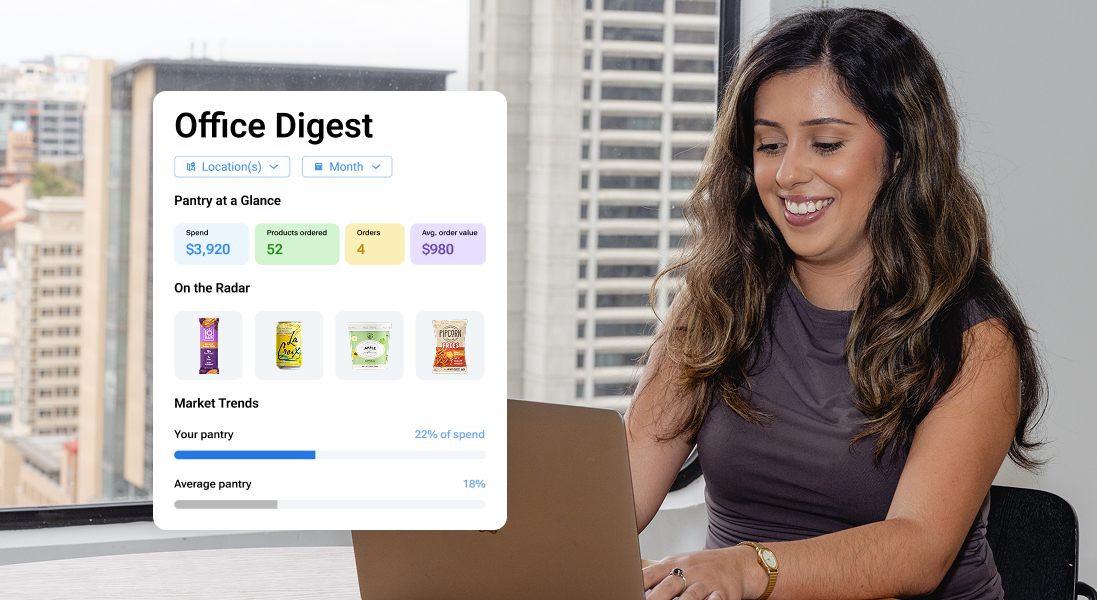
Crafty Launches Office Digest, the Industry's First Monthly Intelligence Report for Workplace Food Programs
October 5, 2026
Blog
Healthy Office Snacks: 50+ Picks Employees Actually Want
October 5, 2026
Blog
Equipment Guide: Hot Water Machines for the Office
October 2, 2026
Blog
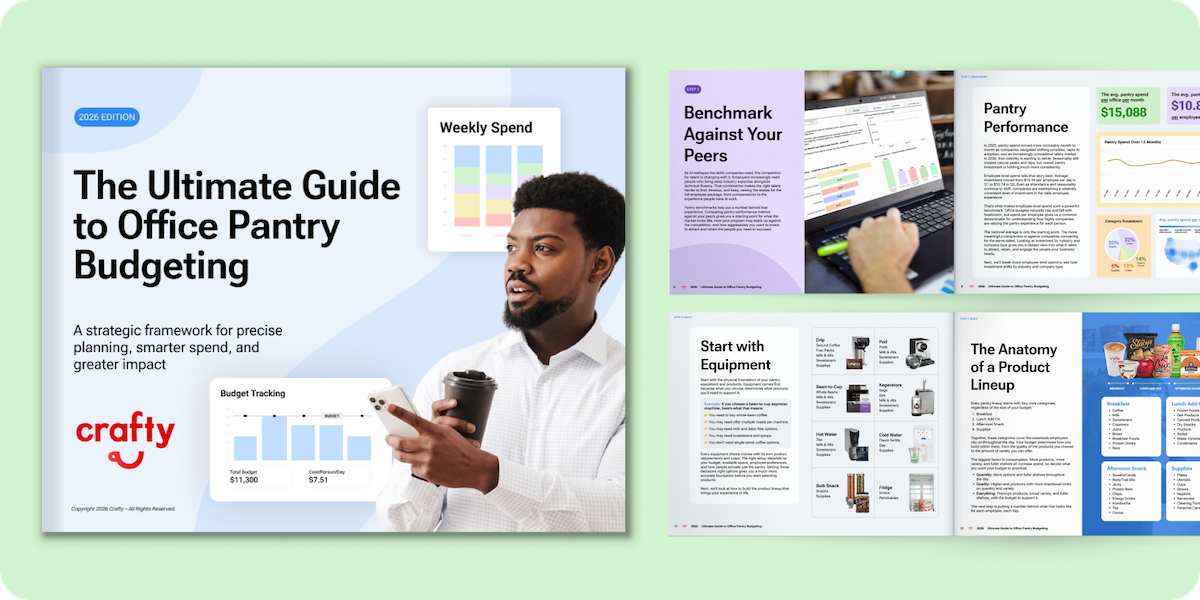
4 Office Pantry Budget Lessons to Know Before Finance Comes Calling
October 2, 2026

Blog
Snacky Hour Episode 2 Recap: ITO EN Japanese Tea and Matcha
September 30, 2026
News
As the Fight for Talent Intensifies, New Data Shows Office Pantry Investment Holding Strong
September 30, 2026
Blog
7 Ways to Use Employee Voting to Build a Better Office Pantry
September 29, 2026