min read
May 14, 2026
How the Financial Services Industry Is Investing in Corporate Pantry Programs
In a world reshaped by AI, financial services firms are investing in their pantry to power the people driving it.

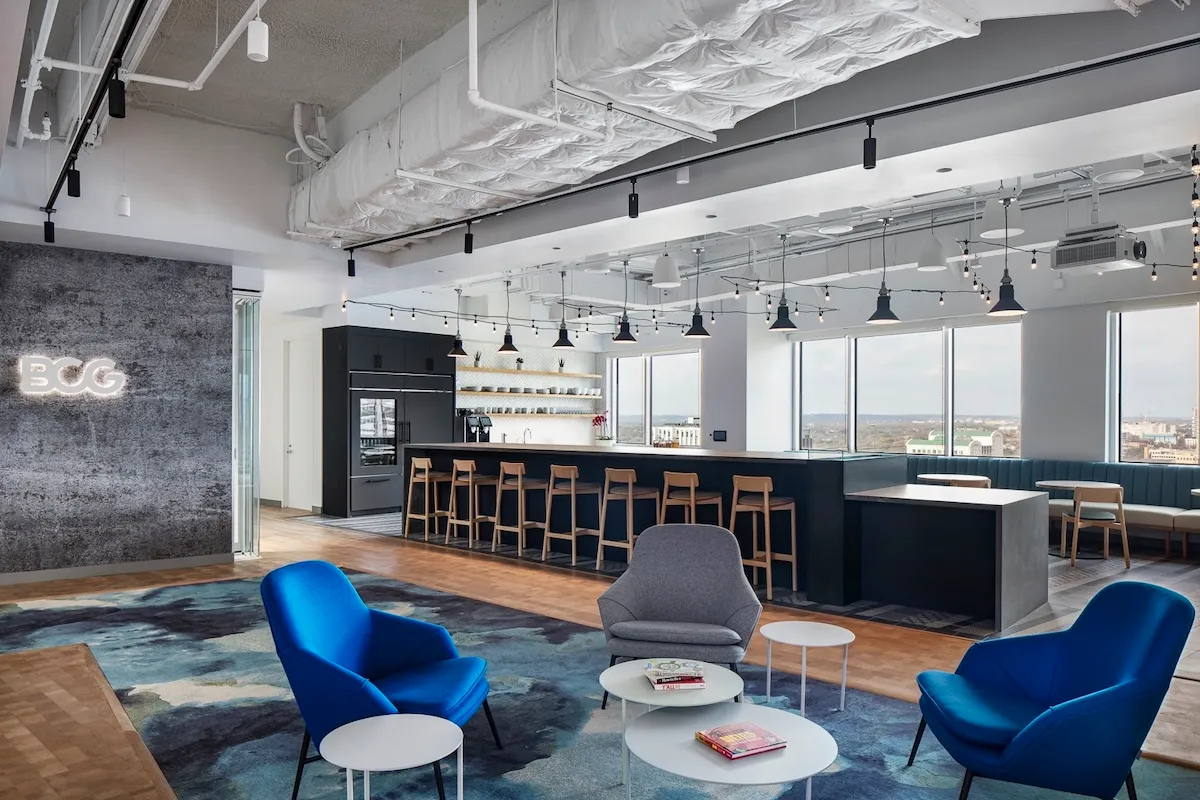
Financial services has always been a high-stakes industry, but as the industry as a whole continues to innovate, it requires a different talent pool to perform, and that talent has expectations.
Across banking, trading, investment, and fintech, firms are racing to embed AI into the core of how they operate. That means building technical teams from scratch: engineers, data scientists, machine learning specialists, and quantitative analysts who can translate AI capabilities into real competitive advantage. According to Forbes, tech workers are increasingly choosing financial services over traditional tech companies, drawn by stability, scale, and the scale of problems worth solving. Deloitte calls financial services among the most aggressive industries in hiring for AI-related roles.
This is reshaping how top companies in the financial industry think about their workplaces and the amenities they need to acquire and retain top talent.
Rising Workplace Expectations in the Financial Industry
To compete for technical talent, financial services firms are rethinking the workplace itself.
Engineers, data scientists, and machine learning specialists built their careers at the top tech companies, where high-quality food service programs and wellness-forward perks were a baseline. As financial services companies look to hire that talent, they're entering a competition not just within their own industry, but with technology, professional services, and more, including all the expectations that come with that.
Along with rising expectations, these companies are using AI to push the boundaries of output and performance. Employees in these fields are being required to take on larger loads of work, while also having to complete everything faster, from analysis to iteration, to judgment, and repeat, all while running on market cycles, which are 24/7.
This is why Crafty saw the financial industry as a whole invest heavily in pantry programs in 2025 and into early 2026.
- Employees rely on functional pantry options to sustain energy, support deep focus, and stay consistent across long, high-stakes days.
- Employers use their pantry programs to signal a workplace built for high performance, matching the expectations of talent that came from the most competitive environments.
A strategic, functional pantry keeps people in the zone. It reduces energy volatility, supports the kind of sustained focus these roles demand, and reinforces that this organization understands what high-output work actually requires.
Financial Services 2026 Pantry Benchmarks
The early 2026 pantry data show that financial services firms are treating the workplace pantry as a tool to sustain high-output teams. Across the sector, financial services firms are averaging $22,054/office/month, the highest of any industry we track.
Financial Service Pantry Spend Breakdown by Company Type
- Markets & Trading: $52,549/office/month
The highest-spending segment in financial services by a significant margin. Trading floors run on markets, not business hours, and AI is now automating the research and execution behind algorithmic trading, meaning the people still in the room are making the highest-stakes calls. The pantry investment matches the pressure. - Insurance: $19,385/office/month
Over half of insurance leaders admit their teams lack the AI skills to match their ambitions, driving aggressive technical hiring to close that gap. As those teams grow, so do workplace expectations. - Investment Firms: $18,944/office/month
Advisors now rely on AI tools to surface business opportunities, generate portfolio insights, and assemble research summaries. The cognitive load across a full day has increased, and pantry programs are being built to match it. - FinTech: $21,098/office/month
Fintechs lead in advanced AI adoption, making them the most technically demanding and most competitive segment for engineering talent. Their pantry programs reflect what it takes to win that competition. - Banking & Advisory: $6,341/office/month
The most conservative segment, but one that's moving. JPMorgan reports AI-driven productivity gains of 6% today, with operations roles expected to reach 40% to 50% as adoption matures. As banks restructure around leaner technical teams, workplace investment is increasing alongside it.
These are organizations that hold their teams to an exceptionally high standard of data literacy and precision. In 2026, that same standard will be demanded from their corporate pantry providers. Real-time spend visibility, consumption tracking, and data-driven assortment decisions are becoming the baseline expectation as financial companies invest in these programs.
What Financial Services Companies Look for in a Corporate Pantry Provider
Financial services firms do not make decisions without data. Every position taken, every risk assessed, every allocation made is backed by real-time visibility and precise reporting. The expectations they have for their internal systems are the same expectations they are now demanding from their corporate pantry provider.
As financial organizations invest most aggressively in their pantry programs, they are leveraging technology to give them more control over pantry spend.
- Budget visibility at the point of decision so programs stay on target without requiring manual reconciliation after the fact.
- Real-time spend tracking so workplace teams know exactly where every dollar is going as orders are placed, not weeks later when invoices arrive.
- Consumption data that shows what employees are actually reaching for, making it possible to optimize the assortment around real behavior rather than assumptions.
- AI-powered product recommendations that surface what to swap in or out based on usage patterns, location, and program goals.
Running a pantry program without this visibility is the equivalent of managing a portfolio without a dashboard. In an industry where data drives every decision, the pantry should be no different. The firms treating it that way are the ones getting the most out of every dollar they invest.
Inside the Average Financial Services Office Pantry
Long hours, real-time decision-making, and back-to-back focus blocks leave little room for long, drawn-out meal breaks. What goes on the shelf has to fit into that reality. The fastest-growing products across financial services pantries are the ones that fuel a demanding workday without disrupting it.
- Snacks (34% of total spend)
High-protein snacks dominate, with bars, jerky, and dried fruit and nuts all posting strong year-over-year growth. Breakfast items also grew over 100% YoY, reflecting teams that are starting their day at their desks. - Beverages (33% of total spend)
Hydration and energy lead the category. Protein shakes are the top-selling individual product in the entire dataset, while energy drinks grew 73.6% YoY. Sparkling water still is a major priority and holds the top spot in terms of units delivered for this industry. - Fresh & Frozen(14% of total spend)
High-protein and grab-and-go options like Greek yogurt and hard-boiled eggs top this category. Fresh produce continues to be a consistent daily staple, with bananas still reigning supreme. - Coffee (13% of total spend)
Quality is a priority across every format, from cold brew to whole bean to pods, which grew 98.5% YoY. Financial services offices are not cutting corners on coffee; they need it to survive. - Supplies (6% of total spend)
Kitchen and dining supplies make up the bulk of this category, led by compostable cold cups to fuel that coffee habit.
Top Office Pantry Products for Financial Companies
The data from Crafty-powered pantries across financial services offices in the US shows a clear preference for options that are fast, functional, and built for long days.
Here is how that plays out across a typical workday:
- 9am: Fairlife Core Power Protein Shake and MUSH Blueberry Overnight Oats. The day starts before the market opens. Employees are fueling up at their desks with high-protein options that carry them through the morning without a crash.
- 11am: Barebells Cookies and Cream Protein Bar and still water. Mid-morning is about sustaining focus. A high-protein bar and consistent hydration keep energy steady heading into the busiest part of the trading day.
- 1pm: Vital Farms Hard Boiled Eggs, Nongshim Instant Shin Cup Noodles, and LaCroix. Employees are grabbing something quick, filling, and easy.
- 3pm: CELSIUS Sparkling Orange and a Banana. The afternoon energy dip is real. Employees are reaching for a clean energy boost paired with fresh produce to push through to close.
- 5pm: The day is not over. Late afternoon calls for something satisfying that bridges the gap between market close and whatever comes next. The top picks are UnReal Dark Chocolate Peanut Butter Cups and Think Jerky Classic Beef Jerky.
- Around the clock: As some teams run global markets, overnight risk monitoring, and after-hours model development, the pantry needs to keep up with them, too. La Colombe Cold Brew Black, C2O Pure Coconut Water, Bevi Vitamin Boost for the Bevi Machine, and Solely Fruit Jerky Mango keep caffeine levels up, hydration steady, and energy quick through the late hours.
Conclusion
Financial services firms are making a calculated bet. The industry is changing faster than most, and the talent required to navigate that change is being courted by every sector. This means workplace strategies also need to rise to the occasion.
The pantry is one of the clearest signals that an organization has thought seriously about what its people need to perform at their best. The top financial firms that understand this are building environments where top talent wants to stay while supporting sustained output.
In a sector where the stakes are high and the margin for error is razor-thin, every detail of your employee's pantry experience is part of the performance equation.
Related Resource
Blog
Equipment Guide: Pod Coffee Machines for the Office
September 23, 2026
Blog
Best Halal Office Snacks for Your Pantry
September 16, 2026

Blog
Snacky Hour Episode 1 Recap: Mezcla, LatinX-Owned Protein Bars
September 15, 2026

Blog
Data Bites: Which Companies Are Spend Most on Office Pantry Programs in Q2 2026?
September 15, 2026

Blog
Best California Snack and Coffee Brands to Stock in Your Office Pantry
September 10, 2026
Blog
Office Equipment Guide: Drip Coffee Machines for the Office
September 10, 2026

Blog
Celebrate Halloween at Work: Breakroom Snacks, Activities, Decor, & More
September 9, 2026
Blog
October Holidays for Work: Breakroom Snack Celebrations
September 9, 2026