min read
December 10, 2025
December Workplace Insights: Great Experiences, Preventing Overwhelm, and Sugar-Free Oreos
How workplace design, emotional overwhelm, and better-for-you treats are rewriting what employees need from the modern office.

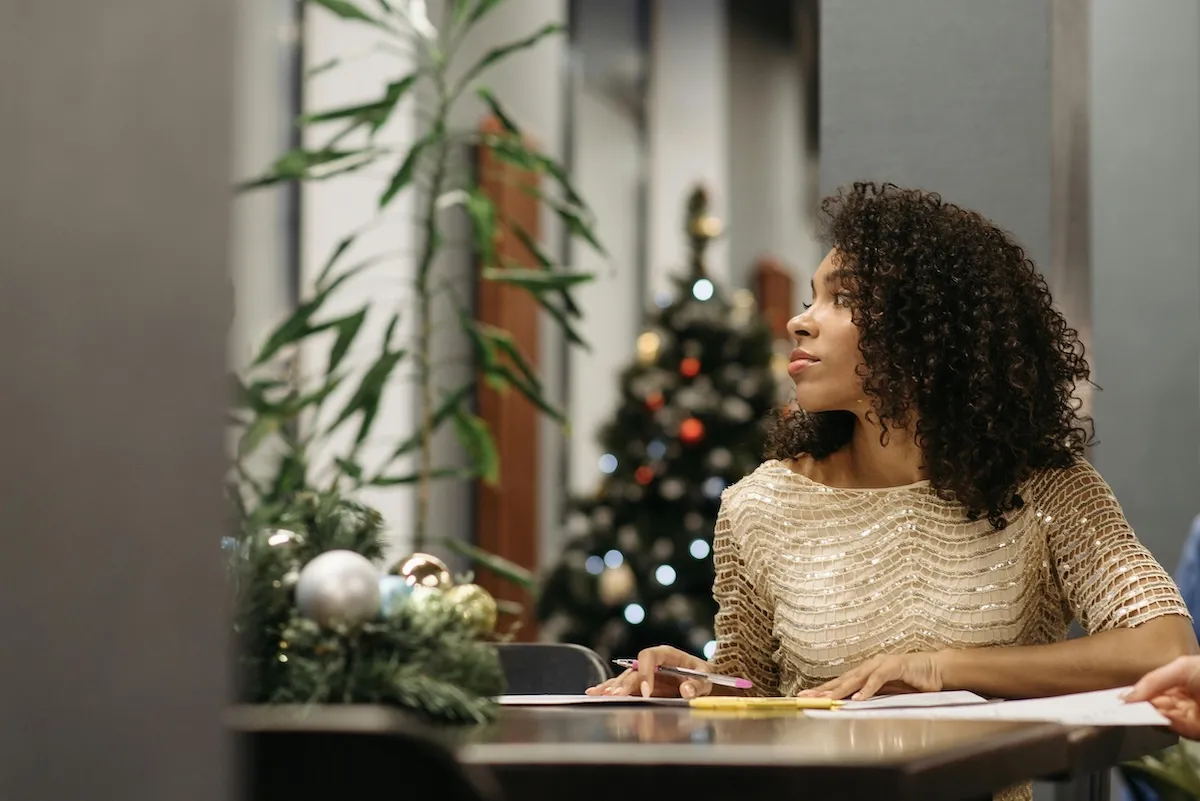
From smart pantry optimization to microbreak culture to better-for-you treats, food continues to be one of the most immediate, tangible ways companies can improve the employee experience. And as 2026 approaches, the workplaces getting ahead aren’t just stocking shelves. They’re designing systems that meet human needs with intention, intelligence, and care.
Employees Aren’t Resisting the Office, Just Bad Experiences
Gensler’s Ray Yuen says workplaces need to feel like experiences.
The corporate world’s return to the office is accelerating. Amazon, JPMorgan, Goldman Sachs, and now Instagram have all pushed teams back onsite five days a week. Leadership is framing these policies around collaboration, creativity, and cultural cohesion. But for many employees, the friction has nothing to do with showing up. It’s about showing up to an environment that doesn’t feel worth the commute.
Across multiple studies, including Gensler’s 2025 workplace research and the Gensler Experience Index, employees consistently ranked food and wellness as the two strongest predictors of a positive in-office experience. They want more than square footage. They want environments that feel intentional, human, and energizing.
Yuen notes that when survey respondents were asked what makes a workplace great, “they didn’t even mention anything about work.” Instead, employees gravitated toward experiences that speak to human needs.
Key drivers of return-to-office satisfaction:
• Food variety and quality
• Wellness and recovery spaces
• Social environments that break routine
• Flexible, multi-use furniture and layouts
• Unique features that create moments of delight
People want spaces that help them regulate their energy, connect organically, and break the intensity of digital work. They want workplaces that feel curated rather than utilitarian, and that make the commute feel like a tradeoff worth making.
The tea: If food and wellness are now the clearest signals of a great in-office experience, then the pantry can’t be treated as a set-it-and-forget-it amenity. For it to actually shape how people feel in the office, it needs the same level of intelligence, consistency, and care that organizations bring to their space design. The companies getting their experience right aren’t stocking more; they’re stocking smarter through systems that make the pantry adaptive, intentional, and aligned with employee values.
Here’s how leading workplaces are optimizing their office pantry:
- Use pantry consumption data to guide decisions so you’re investing in what people actually value
- Identify slow movers early and reinvest those dollars into high-impact categories
- Match assortment to seasonal behavior, shifting your product assortment as tastes evolve throughout the year
- Align product mix with employee values by using dietary, cultural, and sustainability filters to curate with intention
- Protect budgets with clear guardrails, ensuring every ordering decision stays within range before it ever hits the shelf
- Apply behavioral stocking principles like placement, pacing, and presentation to influence consumption without reducing choice
- Create short feedback loops so onsite teams, workplace leaders, and data insights continuously inform each other
The workplaces delivering consistently great pantry experiences build optimizations into their systems and tooling to make it easy to adapt without losing coherence. When all of that infrastructure is in place, the pantry stops being a logistical burden and becomes what employees want it to be: a reliable, intentional, energizing part of the workday. Crafty just happens to have the first and only pantry platform and the expertise to make that level of intelligence and consistency possible.
Overwhelm is the Silent Performance Killer
Nearly nine in ten professionals felt overwhelmed this month, and your highest performers may be hiding it best.
Overwhelm is rising faster than burnout, and it’s far harder to spot. A recent HBR study found that overwhelm is not just “a lot of stress.” It’s a tipping point that occurs when demands exceed a person’s perceived ability to cope. It can appear suddenly, unpredictably, and invisibly, especially among top performers who pride themselves on composure.
Researchers describe overwhelm as the moment when once-manageable tasks feel impossible, cognitive processing breaks down, and people lose their sense of control. It’s volatile, often hidden behind competence, and quietly erodes performance long before it becomes visible.
According to the study:
- More than half of the participants reported breakdowns in concentration
- Nearly a third experienced a decline in performance or could maintain output only by sacrificing sleep, meals, or recovery
- Almost half described a loss of motivation and self-confidence
- Many expressed paradoxical symptoms such as being alert yet exhausted, mentally frozen yet desperate to escape, or externally calm while internally breaking down
Overwhelm also stems heavily from workplace conditions. Sixty percent of documented episodes were tied to heavy workloads, blurred roles, unrealistic expectations, and manager-driven pressure. When the three pillars of sustainable productivity, control, clear standards, and adequate resources, begin to fracture, even the most capable employees hit their breaking point.
Researchers outline three early signals leaders should watch for:
- Alert yet exhausted: Wired by stress hormones but unable to focus or rest
- Mentally frozen yet wanting to escape: Cognitive shutdown paired with intense urges to flee the situation
- Calm on the outside, unraveling inside: Maintaining composure while internal capacity collapses
These contradictions are what make overwhelm so easy to miss and so costly when overlooked.
The tea: The pantry is one of the simplest, most natural mechanisms for interrupting overwhelm because it creates built-in opportunities for microbreaks. These are short, restorative pauses that reset attention, ease physiological stress, and spark small moments of human connection. Research from our 2025 Workplace Trends Report found that microbreaks can increase mood, improve concentration, reduce fatigue, and strengthen a sense of belonging. Therefore, the pantry becomes an essential anchor point for these moments because people are more likely to take breaks when the environment nudges them.
Here’s how leading workplaces are using their pantry to support microbreak culture:
- Create “collision zones” by placing items in different areas so employees naturally move, explore, and interact
- Design for convenience to make stepping away feel effortless rather than disruptive
- Use morning-friendly options to prompt earlier breaks, when fatigue first begins to build.• Host quick pop-up tastings or events that pull people out of task mode and spark connection
- Encourage meeting buffers so people can refill coffee, grab a snack, or reset their brain before the next task
- Avoid “stacked breaks” where grabbing a snack becomes another task to squeeze in; instead, create pathways that invite detachment from the screen
- Support social microbreaks that boost oxytocin and dopamine, increasing resilience and focus.
When microbreaks become part of the office rhythm, teams return to their work with sharper attention, steadier energy, and greater emotional capacity. And while the pantry can’t fix the structural causes of overwhelm, it can be one of the most effective daily tools for preventing employees from reaching the tipping point.
Oreo Gets a Sugar-Free Makeover
After four years of development, sugar-free Oreos will arrive in January.
After four years of reformulation, global testing, and consumer feedback, Mondelēz is releasing a better-for-you Oreo. And the timing makes sense. With more than six in ten Americans actively limiting sugar, and “low in sugar” ranking as a top marker of healthy eating for years, classic snacks are under pressure to evolve.
As Michelle Deignan, the brand’s VP of marketing, put it, the goal was to deliver a “100% authentic Oreo experience” while filling a gap for people who love the ritual but not the crash. Sugar remains the biggest barrier stopping many consumers from buying cookies at all, and the new Oreo Zero Sugar aims to remove that friction and reach audiences who’ve long opted out.
Across food and beverage categories, people want indulgence that aligns with long-term wellness goals. They're still reaching for familiar, nostalgic flavors, but they're choosing options that help them balance energy, manage blood sugar, or reduce additives.
The tea: Across the pantry, low- and no-sugar products are rising alongside clean-label, allergen-friendly, and functional snacks. With New Year's Resolutions right around the corner, that preference becomes even more pronounced in the workplace.
December is the time to prepare and experiment. As consumption patterns slow ahead of the holidays, testing a few low- or no-sugar additions helps you learn what resonates before wellness goals peak in January. A refreshed indulgence strategy now means a more satisfying, aligned pantry later.
Among the brands shaping this category right now:
- Pure Protein: Familiar flavors with a macro-friendly profile.
- ALOHA: Plant-based, low-sugar bars that balance energy without heaviness.
- SmartSweets: Classic candy flavors remade with minimal sugar.
- Solely: Fruit-forward snacks with nothing extra added.
- YumEarth: Allergen-friendly treats with simple ingredient lists.
- Hormbles Chormbles: Playful indulgence with a modern nutrition profile.
Conclusion
The workplace continues its shift from a place of presence to a place of purpose. Employees are asking for environments that help them feel grounded, supported, and energized. Whether it’s optimizing the pantry with intelligence, building in microbreaks to prevent overwhelm, or aligning indulgence with evolving wellness goals, food remains one of the most powerful levers companies have to shape the day-to-day experience of work.
Related Resource
Blog
Fueling the Season: Inside a Pro Sports Organization's Workplace Food Program
October 7, 2026
Blog
The Insider's Guide to Choosing a National Office Coffee Service Provider in 2027
October 6, 2026
News
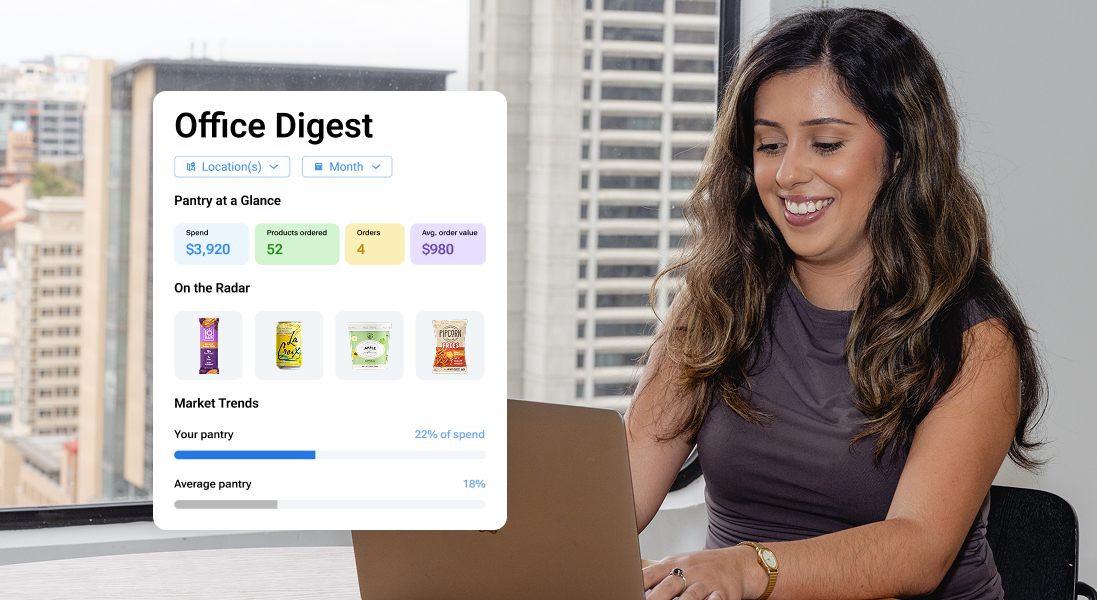
Crafty Launches Office Digest, the Industry's First Monthly Intelligence Report for Workplace Food Programs
October 5, 2026
Blog
Healthy Office Snacks: 50+ Picks Employees Actually Want
October 5, 2026
Blog
Equipment Guide: Hot Water Machines for the Office
October 2, 2026
Blog
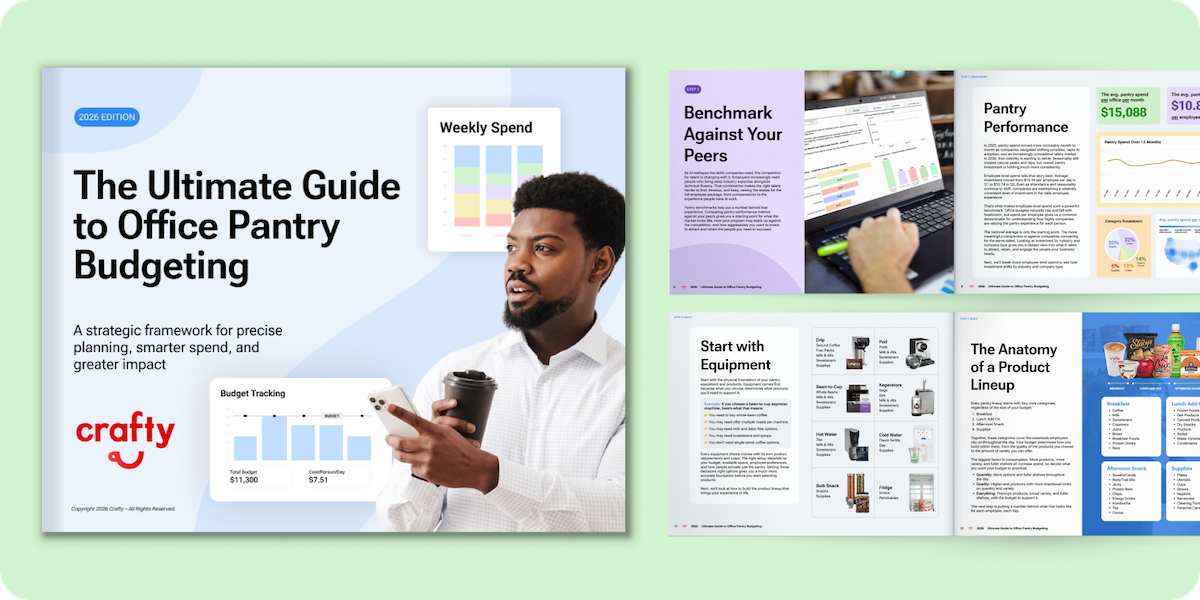
4 Office Pantry Budget Lessons to Know Before Finance Comes Calling
October 2, 2026
Blog
Snacky Hour Episode 2 Recap: ITO EN Japanese Tea and Matcha
September 30, 2026
News
As the Fight for Talent Intensifies, New Data Shows Office Pantry Investment Holding Strong
September 30, 2026
Blog
7 Ways to Use Employee Voting to Build a Better Office Pantry
September 29, 2026