min read
January 7, 2026
The New Rules for Alcohol in the Workplace in 2026
Moderation gets a rebrand and a new wave of mindful drinking helps employees reconnect without the all-or-nothing approach.

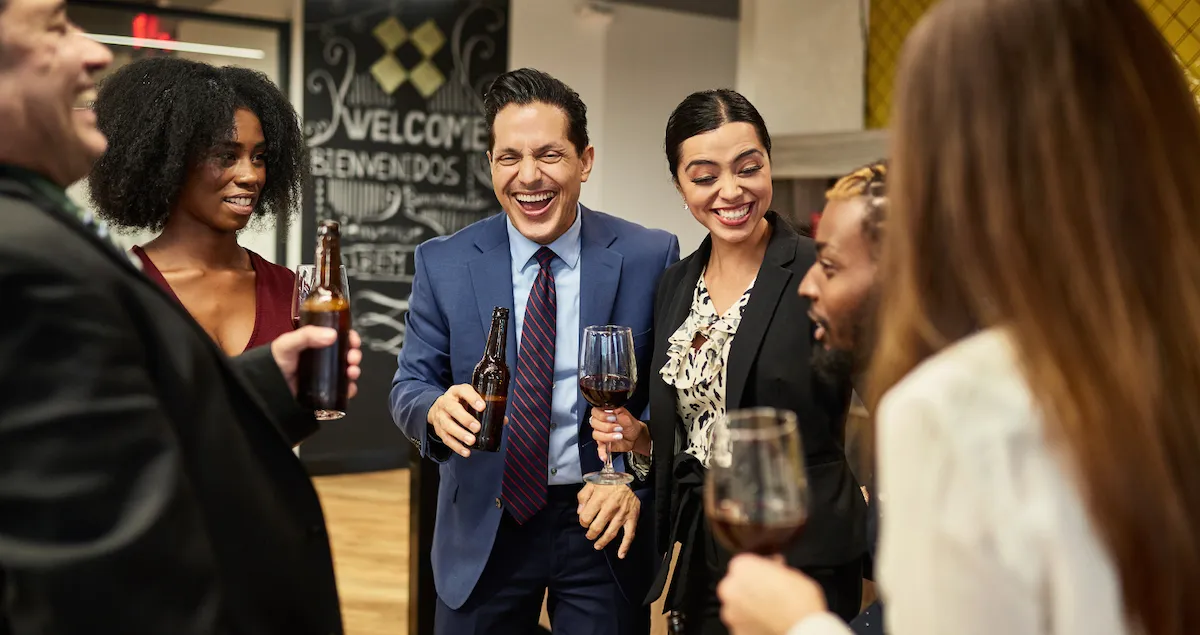
Alcohol never vanished from workplace culture, but the days of staying at the office late to enjoy a beer definitely stopped being the default as employees returned to the office. Wellness priorities shifted, employees quietly scaled back, and for a while, it felt like the only options were either to bring happy hour back exactly as it was or cut alcohol out entirely.
But as we step into 2026, moderation is getting a rebrand. We're now calling it Zebra Striping.
Instead of abstinence-only resolutions, this middle-ground approach adopts mindful drinking habits where you alternate alcoholic and non-alcoholic drinks 1:1. One beer, one sparkling water. One glass of wine, one kombucha. It is not about quitting. It is about pacing, participation, and choice. Who would have thought?
Why does that matter in the workplace? Recent data says that more than half of US workers are lonely, and that loneliness is disrupting productivity. They want to feel less isolated and more connected, but it's hard to really accomplish that in a formal way. That's why happy hour culture existed in the first place; it's casual, low stakes, and easy to jump in. The difference is that in 2026, we don't want that hangover. So let's explore how we got here and the new rules around alcohol in the workplace in 2026.
Zebra Striping: What and Why
Zebra Striping is a simple mindful drinking habit: alternate alcoholic and non-alcoholic drinks 1:1. For every beer, you drink a glass of water. For every glass of wine, you bring in a glass of kombucha. It gives people a way to stay social without overdoing it, and it fits real-world settings where full abstinence is not realistic or even desirable for many employees.
This new moderation approach is gaining traction because it aligns with how Americans are actually drinking today. It's not that people are quitting alcohol entirely. It’s that they’re drinking less often, drinking more selectively, and caring more about how drinking affects sleep, mood, and next-day performance.
- Gallup found that only 54% of U.S. adults say they drink alcohol, with the average intake falling to 2.8 drinks, the lowest since 1996
- A growing share of Americans say even moderate drinking is harmful, which is influencing drinking frequency and volume
- NielsenIQ reported $925M in off-premise sales for non-alcoholic drinks such as beer, wine, and spirits with 22% year-over-year growth
Even with Americans drinking less overall, workplaces are one of the places where the idea of a happy hour still has staying power, because it solves a different problem: connection.
Gallup research found that 1 in 5 employees reported feeling lonely “a lot” the previous day. So even as overall alcohol consumption declines, that doesn't mean the idea of gatherings with drinks dies. Instead, there are just more options as employers create casual connection points for employees to get to know each other, whether that's a happy hour, all-hands, game night, or just celebrating a new launch.
In 2026, the winning approach is not beer kegs all day. It's simply holding space for both. Zebra Striping, or moderation for the rest of us, keeps the social ease of workplace happy hour culture, but replaces excess with intention. Let's dive into the rules.
Rule 1: Alcohol Can’t Be the Main Event
If the only way employees can connect is through alcohol, a huge portion of your team will feel excluded, pressured, or simply uninterested.
Old world: A happy hour with a bunch of drinks was the party.
New standard: Alcohol can be part of the event, but it can’t be the event.
Recommendation: Design social events around something else first
- a theme (a holiday, movie, TV show, pop culture reference)
- an activity (game night, trivia, food tasting, mini tournament)
- food (snack tasting, a cooking demo, guided pairings)
Then treat alcohol as one of several beverage choices, not the only reason people show up.
Rule 2: More Non-Alcoholic Options
The “non-alcoholic option” needs to be more than water. This is the biggest difference between then and now.
Old world: The person who didn't want to drink could drink water.
New world: Employees expect no/lo options that are intentional, visible, and actually enjoyable.
Recommendation: Offer at least three solid non-alcoholic options at every social gathering:
- Something sparkling: LaCroix, Spindrift, Topo Chico
- Something functional: GT Kombucha, Wild Wonder, Poppi, or Olipop
- Something non alcoholic: NA Beer, Wine, or Lagunitas Hoppy Refresher Variety Pack
Rule 3: Flexibility Over Permanence
You don’t have to have alcohol available all day, every day to have a culture people enjoy. In 2026, alcohol works best when it shows up as an intentional part of the office rhythm, not a permanent background feature.
Old world: Beer and wine were always stocked because that’s what “cool office culture” looked like.
New standard: Alcohol should match the moment. It’s occasional, purposeful, and aligned with how your employees actually want to participate.
Recommendation: Build a “flex” approach to alcohol that adapts to your calendar.
- Bring in more alcohol for meaningful moments (major launches, big all-hands, team events)
- Use non-alcoholic staples as the everyday default (cold brew, kombucha, wellness sodas, sparkling waters)
- Stock a handful of ready-to-drink alcohol options for those smaller impromptu moments. (Pro tip: Stock them in an area where they aren't at eye level and maybe in a place that isn't in the thick of things to control consumption.)
This is how you get the benefits of workplace community without turning drinking into a workplace norm.
Rule 4: Smart Stocking
Stocking alcohol is not about having “more.” It’s about having the right amount at the right time. Remember, alcohol is expensive so you don't want to buy too much and have it go to waste.
Old world: Stock everything because you never know what people want.
New standard: Stock based on what the data tells you about employee behavior, event patterns, and actual demand.
Recommendation: Use the Crafty Platform to stock alcohol intentionally, based on what your team actually uses, so you can forecast future orders instead of guessing.
- Category Reporting: See alcohol spend by category and how it trends over time, so you can understand what you’re actually investing in and how your program is shifting.
- Automated Ordering: Crafty helps ensure you only order what you need by setting minimum thresholds. When you hit them, we automatically order more, so you have just the right amount in stock.
- Top Product Performance: Quickly identify the top and bottom alcohol products, so you keep the winners, swap low-performing products, and stop spending money on items that don’t move.
The goal isn’t to remove alcohol. It’s to make sure you aren't wasting your pantry budget, storing unused product, or treating alcohol like the default way to build culture.
Conclusion
Alcohol is no longer the default way to build workplace culture. It’s just one option in a bigger, more intentional approach to connection. Employees want casual moments that feel easy to join, but the old model of “let’s grab a drink” as the primary answer does not work the same way anymore, especially when wellness is front and center and people are tired of paying for a fun night with a brutal next day.
Zebra Striping (even if it's just moderation in a new font) is a middle ground employees have been waiting for. It gives people a way to participate without overdoing it, to choose what works for them without explanation, and to be part of the moment without sacrificing how they feel tomorrow.
The best workplace culture in 2026 will not be built on beer taps or bar carts. It will be built on choice, inclusivity, and community.
Related Resource
Blog
Fueling the Season: Inside a Pro Sports Organization's Workplace Food Program
October 7, 2026
Blog
The Insider's Guide to Choosing a National Office Coffee Service Provider in 2027
October 6, 2026
News
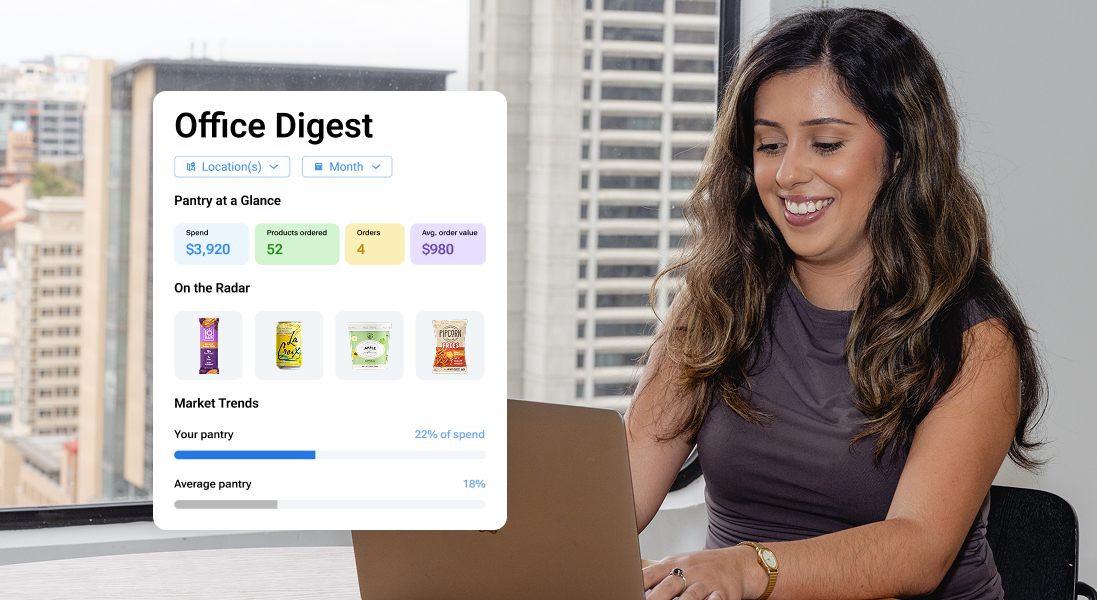
Crafty Launches Office Digest, the Industry's First Monthly Intelligence Report for Workplace Food Programs
October 5, 2026
Blog
Healthy Office Snacks: 50+ Picks Employees Actually Want
October 5, 2026
Blog
Equipment Guide: Hot Water Machines for the Office
October 2, 2026
Blog
4 Office Pantry Budget Lessons to Know Before Finance Comes Calling
October 2, 2026
Blog
Snacky Hour Episode 2 Recap: ITO EN Japanese Tea and Matcha
September 30, 2026
News
As the Fight for Talent Intensifies, New Data Shows Office Pantry Investment Holding Strong
September 30, 2026
Blog
7 Ways to Use Employee Voting to Build a Better Office Pantry
September 29, 2026