READ THE REPORT
Your Guide to Building a High-Performing Office Pantry
Turn your pantry into a competitive advantage. Explore 12 strategies to strengthen pantry performance, optimize your investment, eliminate waste, and unlock capacity for higher-value priorities.
Read the full report below or download the PDF to save and share.
Key Takeaways
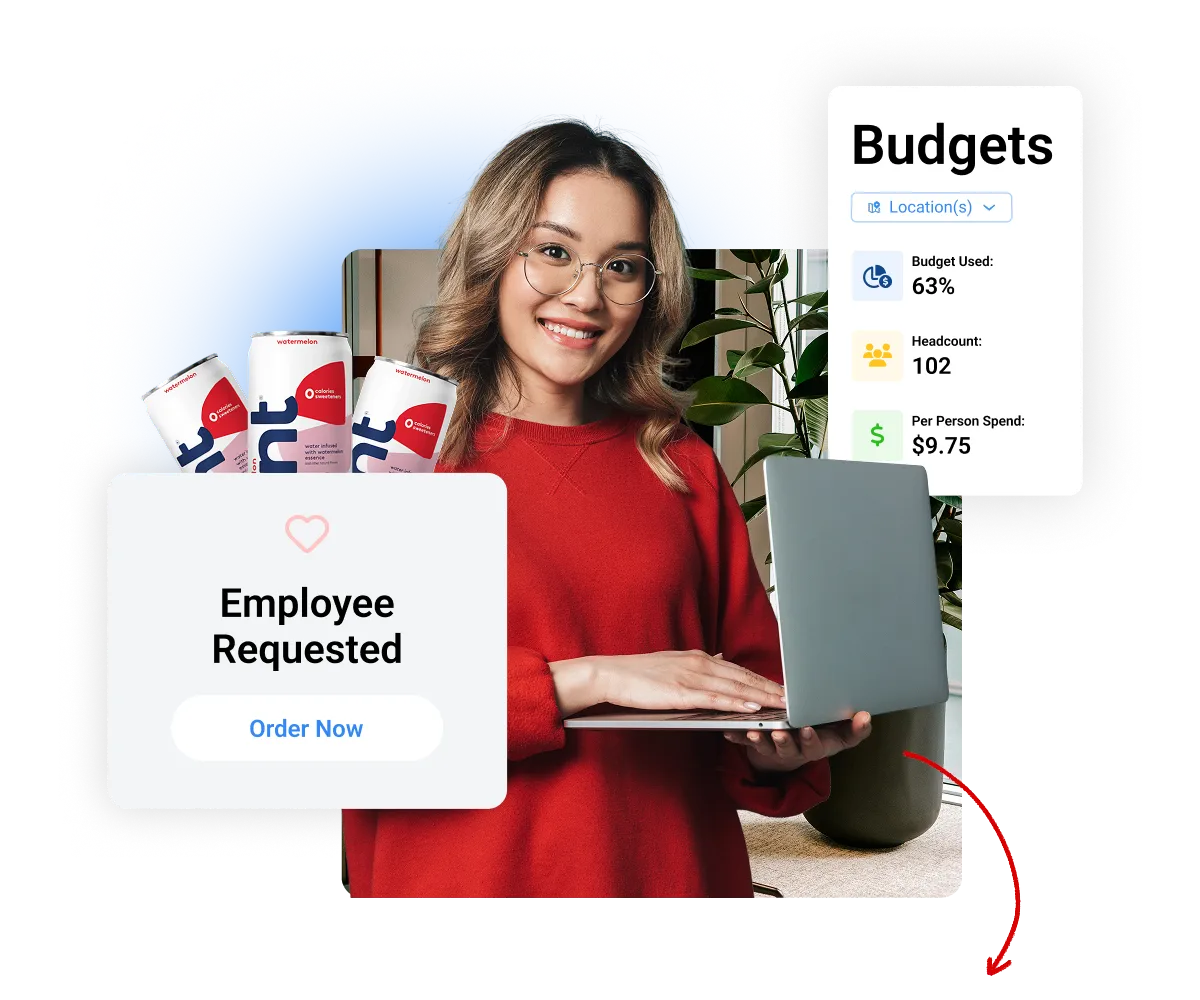
- Build a workplace experience that drives performance. Deliver a consistent, personalized pantry that strengthens employee loyalty, reinforces company culture, and gives people more reasons to show up and do their best work.
- Get more value from every dollar invested. Use real-time data to align spending with employee demand, eliminate low-value purchases, and prevent waste before it impacts your bottom line.
- Give your team time back to focus on what matters. Combine smart technology with expert execution to eliminate operational friction, maintain accountability across locations, and free up resources for higher-impact priorities.
Continue reading the full report below, or download the PDF to save and share with your team.
A MESSAGE FROM OUR CEO
- Executive Summary: A Note From Nate Rosenstock
After working with hundreds of companies across industries, one pattern is consistent: the workplace is a direct reflection of a company's real commitment to its people.
As CEO, my job is to set a clear vision and hold high standards. That means pushing every part of the business to move faster, operate leaner, and deliver measurable results. The companies outperforming their peers are not the ones with the most resources. They're applying greater discipline, allocating more precisely, and measuring what most teams overlook. That standard extends to every corner of the workplace, including the pantry.
A well-run pantry consistently ranks among the most visible, cost-effective, high-impact tools a company has. It signals care for your team and alignment between your culture and your business strategy. When executed well, it showcases operational discipline, improves performance, reduces churn, and reinforces your company's ability to deliver on its promises, internally and externally.
Before 2026, we saw widespread experimentation, and now that window has closed. Every business investment is expected to perform, and the programs that are thriving are the ones built on strategy, supported by data, and managed with the same rigor as every other function.
If you are not seeing that kind of return, it is because your pantry is not operating at the level it should. Most underperforming programs suffer from the same issues: disjointed efforts, outdated tools, inconsistent processes, and minimal oversight. That leads to an experience breakdown, a confidence issue, and costs that go far beyond the invoice. The harder-to-measure loss in productivity, performance, and innovation when employees have to go elsewhere for what they need is real, and it compounds.
Inside this playbook, you'll find 12 strategies to turn your pantry into a high-performing business asset, drawn from the programs we manage today. Each one is designed to close the gap between what your pantry costs and what it delivers, connecting spend and utilization to the metrics that matter most to your business.
In a year when every dollar is under scrutiny and every investment is expected to perform, the pantry programs that win will be those built on strategy, powered by technology, and managed with intention.
What Is Office Pantry ROI?
How Employees and Employers Both Win
The best workplace programs don’t just perform for your business, but they also deliver for your people. A strategic pantry is one of the rare investments that checks all the boxes, so everyone comes out ahead.
But, ROI doesn’t look the same on both sides.
For employers, ROI isn’t only about spending less. It’s about making sure what you spend works harder. Pantries come with a cost, but it can be a small fraction compared to what it helps drive when it’s executed efficiently: healthier and happier employees, fewer sick days, more productive days, and stronger output.
For employees, ROI shows up every day. It’s the financial relief of not spending $10–$20 on food and drinks. It’s the convenience of not having to waste valuable time on the clock to grab a quick coffee. It’s the fuel that helps them stay sharp, hit goals, and grow in their careers.
When a pantry program is working, you’ll not only see it in the culture, but you’ll see it in the numbers. But that type of success isn’t built on guesswork.
A great pantry program is outcome-led, performance-backed, and business-aligned.
How Employee Benefit
Food is expensive, and your employees feel it. The pantry is no longer just a nice-to-have perk, but part of your total compensation and employee experience package.
✓
Real financial impact
A stocked pantry can offset anywhere from $10–$20 per day in an employee’s personal spend on snacks, coffee, drinks, and beyond.
✓
Support a healthier lifestyle
A smart pantry gives employees the tools to make better choices throughout the day to improve their long-term health, including blood pressure, blood sugar levels, BMI, and more.
✓
Creates a deeper sense of connection
Employees want to feel aligned with the place they work. Pantries that reflect values like sustainability and DEI foster deeper connections.

How Employers Benefit
When done right, the pantry becomes one of the lowest-cost, highest-impact ways to accelerate performance, reinforce culture, and build a workplace people want to be in.
✓
Drives traffic without friction
A convenient pantry gives people a reason to come, engage, and stay present without relying on forced policies or ineffective incentives.
✓
Fuels productivity and performance
When teams are energized, nourished, and focused, they perform better. That translates into stronger daily output at scale.
✓
Reinforces company values
The pantry is one of the only tangible ways to show what the company stands for every single day. It’s our opportunity to inspire, build trust, and cultivate loyalty and belief in the company and the leaders behind it.

TABLE OF CONTENTS
The 4 Pillars of Office Pantry Optimization
When a pantry program is working, you’ll not only see it in the culture, but you’ll see it in the numbers. But that type of success isn’t built on guesswork. A great pantry program is outcome-led, performance-backed, and business-aligned.
Nail all pillars, and your pantry becomes a business accelerator. Miss them, and it becomes an invisible drag.
✓ Get It Right
You deliver a high-quality and consistent pantry that fuels results, strengthens satisfaction, reinforces values, and signals a workplace built for lasting success.
✗ Miss the Mark
Inconsistencies erode trust and signal that your company may not be as strong or aligned as it claims, ultimately undermining the employee experience.
✓ Get It Right
You align spending with performance, stretch every dollar, and build a pantry that delivers more value for less.
✗ Miss the Mark
You overspend on low-impact offerings, lose financial control, and weaken confidence in your workplace investments.
✓ Get It Right
You reduce inefficiencies, support sustainability goals, and strengthen your reputation for smart stewardship.
✗ Miss the Mark
You absorb avoidable costs, weaken cultural credibility, and cast doubt on your team’s ability to manage resources responsibly.
✓ Get It Right
You protect your team’s time, streamline decisions, and free up capacity for strategic priorities and professional growth.
✗ Miss the Mark
You drain internal resources, stall momentum, and create friction that distracts from bigger goals.
How to Elevate Your Pantry Experience
Then 2025
The pivot
The experimentation window closed. Every part of the workplace is now expected to show measurable performance.
NOW 2026
The signal
Employees come in with intention. They feel the difference between a thoughtful pantry and an afterthought.
NEXT BEYOND
The payoff
Get it right and it compounds into culture. Miss the mark and the trust you've built quietly erodes.
Elevate Your Pantry Experience
Why Pantry Consistency Compounds into Culture
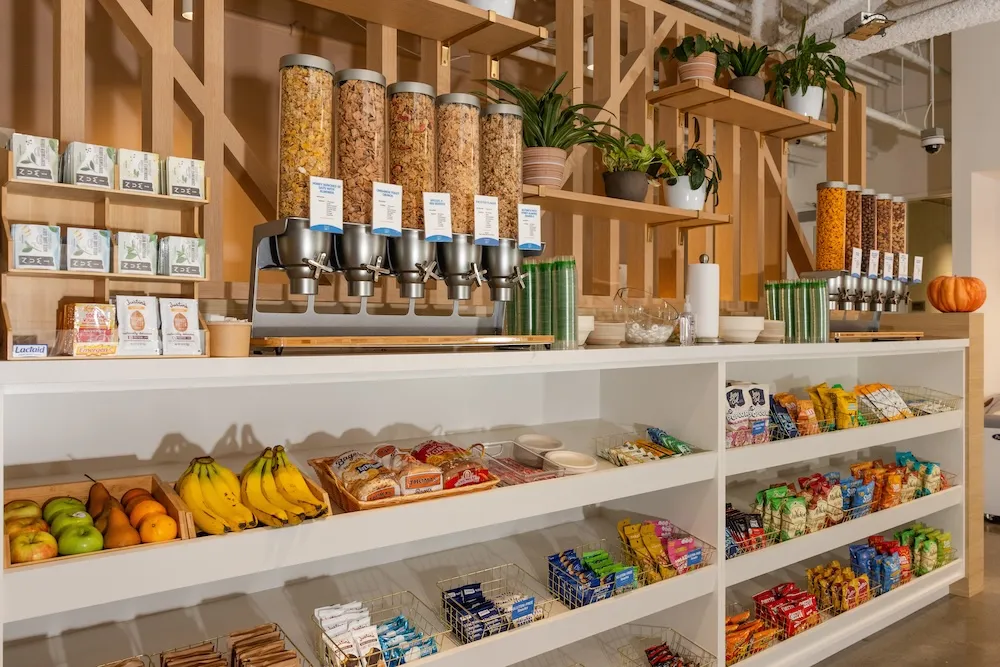
An elevated pantry experience is one of the clearest signals a company can send about how invested they are in their people. It’s a daily opportunity to strengthen employee connections, reinforce your values, and show employees they are part of something built to last.
Get it right, and it compounds. Miss the mark, and it erodes trust.
In 2025, companies were in experimentation mode: testing new tools, strategies, and approaches to see what stuck. In 2026, the focus has shifted from experimentation to performance, and every part of the workplace, including the pantry, is expected to show up.
Pantry programs previously built on instinct, one-off requests, or inconsistent service will no longer cut it with employees or leadership. Both expect more: more personalization, more function, more impact. Tighter resources are not an excuse not to perform.
To meet rising expectations without increasing complexity, leading organizations are turning to technology. The right tools make it easier to understand employee preferences, adapt to changing needs, and deliver the quality, personalization, and reliability employees expect. In a year defined by performance, technology is helping workplace teams create experiences that feel intentional, relevant, and worth showing up for.
Standardize Your Pantry Across Every Office
THE PROBLEM

Built on instinct, not strategy.
- Lack of centralization and inconsistent experience
- Instinct-based programs create friction and erode trust
- Disjointed programs quietly drain time and budget
WHAT’S AT STAKE

Fragmentation that won't scale.
- Fragmented programs are harder to scale reliably
- Reactive work limits strategic thinking
- Inconsistent signals weaken culture and credibility
THE STRATEGIC FIX

Standards to scale with tools to execute.
- Define pantry standards across product, service, setup
- Tailor execution within a consistent framework
- Streamline with centralized tools built to scale
Tools You Need

A central pantry command center.
- Centralized inventory management across offices
- Task-by-task operational oversight to verify execution
- Quantitative and qualitative feedback loops to close gaps
Curate Pantry Products Employees Actually Want
THE PROBLEM
Values that are stuck in slides.
- Lack of data makes curating with confidence hard
- Teams spend hours manually hunting for products
- Updates take too much time and coordination
WHAT’S AT STAKE
Static pantry equals a static culture.
- A static pantry signals employees aren't a priority
- Lack of relevance leads to transactional mindsets
- Transactional workplaces see higher turnover
THE STRATEGIC FIX
Products that mirror your values.
- Use your pantry to reflect what you stand for
- Align products to tastes, values, and wellness goals
- Use tech to act faster and measure impact
Tools You Need
Curation driven by data, not guesswork.
- Employee voting with centralized data collection
- Filtered product search to find aligned products fast
- Product performance data to measure what lands
Plan Pantry Orders Around Seasonal Demand
THE PROBLEM
Responding too late, season after season.
- Employee needs evolve faster than programs can respond
- Without data, programs default to autopilot
- Seasonal opportunities are consistently missed
WHAT’S AT STAKE
The reaction costs more than foresight.
- Employees stop seeing value in a program that lags
- Disengagement compounds, hiring costs rise
- Budget wasted on reaction instead of performance
THE STRATEGIC FIX
Plan your program with data, not hope.
- Lead with data instead of assumptions
- Track category and subcategory spend seasonally
- Adjust the product set using moment-planning
Tools You Need
Track patterns to refine your program.
- Historical pantry spend data to forecast demand
- Subcategory breakdowns to identify trends
- AI-powered product swap tooling to act quickly
A Four-Step Framework for Building a Better Pantry With Technology

1. Centralize
Build a strong foundation with one platform that manages your pantry program across every office, so your team can execute a consistent strategy and operation at scale.

2. Listen
Give employees a centralized way to vote and share feedback so your lineup reflects what your people actually want, value, and expect from their workplace.
3. Measure
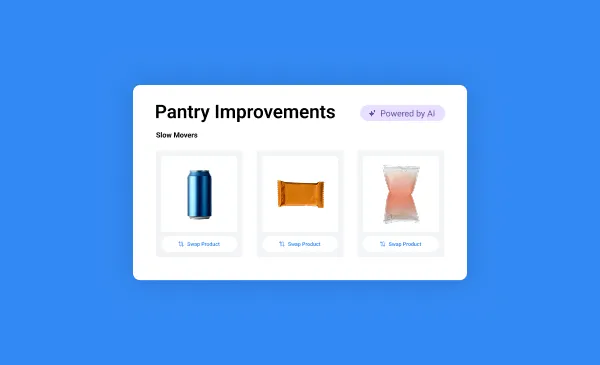
Track what moves and what stalls across every location so every order decision is backed by real consumption data and not instinct.

4. Refine
Use historical spend and subcategory trends to forecast seasonal demand and continuously sharpen your program before the moment hits.
Elevate Your Pantry Experience
Why Strategic Pantry Programs Matter
A well-run pantry does more than provide food and beverages. It strengthens workplace culture, builds employee loyalty, and supports performance. As one of the most visible and frequently used workplace benefits, the pantry is an opportunity to reinforce company values and create an experience employees can count on.
But delivering that experience consistently takes more than good product selection. High-performing pantry programs combine the right technology, data, and expertise to:
- Build trust through consistency: Deliver a reliable experience across locations while reducing service disruptions, wasted resources, and operational friction.
- Reflect employee needs and company values: Offer products that support dietary preferences, cultural relevance, and sustainability goals, helping employees feel seen and valued.
- Anticipate demand and adapt faster: Use consumption data, employee feedback, and seasonal trends to forecast needs, optimize selections, and make proactive decisions.
- Turn everyday perks into measurable value: Track performance, improve resource allocation, and connect pantry investments to broader workplace goals.
The impact of workplace perks is clear:
- 86% of employees say free food encourages them to come into the office. (ezCater)
- 60% of employees say losing perks would reduce their loyalty to their employer. (Dayforce)
- 60% of employees consider workplace perks when evaluating a job offer. (Glassdoor)
The opportunity is to move from reactive pantry management to a more intentional, data-driven program that delivers a better employee experience while making smarter use of time and budget.
- 3 KPIs to Measure Pantry Experience
A qualitative signal that tells you whether employees feel heard and whether the pantry reflects their needs. High engagement with voting indicates trust in the program.
Watch For: Declining participation, recurring requests for the same missing items, or low satisfaction with existing products; early signs that the program has stopped listening.
Ensures pantry investment aligns with the number of employees you're supporting. Keeping headcount current allows you to accurately measure employee-level spend, plan resources, and deliver the experience you intended.
Watch For: Hiring, intern classes, all-hands meetings, events, policy changes, and office growth. These moments are good opportunities to update and keep reporting accurate.
Normalizes spend against actual headcount so you can benchmark fairly across locations, time periods, and budget tiers, without being misled by raw totals.
Watch For: Significant variance between locations at the same investment tier, or a declining PPPD alongside flat spend, which may quietly signal waste.

Optimize Your Office Pantry Spend
Then 2025
The pivot
Budgets tightened, and every dollar came under scrutiny. Pantry programs built on guesswork were hard to defend.
NOW 2026
The signal
Companies are moving from reactive spending to precision investment. Every dollar is expected to perform.
NEXT BEYOND
The payoff
Programs that align spend to real usage deliver more value for less, and earn the trust of leadership in the process.
OPTIMIZE PANTRY SPEND
Why Smart Pantry Spending Is Non-Negotiable
For years, pantry programs were managed on feel. Teams ordered what looked low, restocked what ran out, and adjusted based on whoever complained loudest. It worked well enough when budgets were flexible and expectations were lower. That approach does not hold up when every dollar is under scrutiny.
Over 21% of Crafty-powered pantries are now focused on finishing the year at or below budget, up from 15% the year prior, rather than prioritizing spending to budget or expanding employee experience investments. The pantries navigating that shift successfully are the ones with a clear picture of where every dollar is going, what employees are actually consuming, and where spend can be reallocated for greater impact.
Precision over abundance. Performance over guesswork.
At the enterprise level, this is even more critical. Tech-enabled programs provide the visibility, control, and data infrastructure needed to ensure that every dollar is being spent for maximum impact. A few missed opportunities across multiple offices can cost thousands, even tens or hundreds of thousands, if not caught early and corrected quickly. That urgency is reflected in the 27% increase in enterprise companies switching to Crafty to bring that level of precision to their program.
Set Order-Level Pantry Budget Targets
THE PROBLEM
Overspending before anyone notices.
- Monthly budgets miss what happens in between
- Without order tracking, overspending happens early
- Teams scramble to cut back at the cost of experience
WHAT’S AT STAKE
Small leaks become big losses.
- Overspend builds quietly, eating into your budget
- Financial pressure forces reactive cuts and friction
- You erode long-term value for short-term savings
THE STRATEGIC FIX
Built-in spend intelligence.
- Create order-level targets tied to program goals
- Embed targets where spending decisions happen
- Empower teams to course-correct before overspending
Tools You Need
Guardrails at the point of decision.
- Budget trackers built into every order
- Notifications when approaching your budget limit
- Spend versus budget monthly tracking across locations
Use Consumption Data to Cut Slow Movers
THE PROBLEM
Spending on what sits, not what moves.
- Limited product data leads to unfocused spend
- Low-use items take up space and drain the budget
- Missed potential limits the pantry’s overall impact
WHAT’S AT STAKE
A pantry that leadership starts to question.
- Ineffective programs cost more than they deliver
- Employees disengage when offerings miss the mark
- Leadership starts questioning the program’s value
THE STRATEGIC FIX
Consumption data is your North Star.
- Use real-time data to guide smarter decisions
- Quickly identify the products that are working and aren't
- Reallocate spend with confidence and clarity
Tools You Need
Product insights to drive each decision.
- Product reports to identify what to keep and what to cut
- Slow mover insights that flag underperforming products
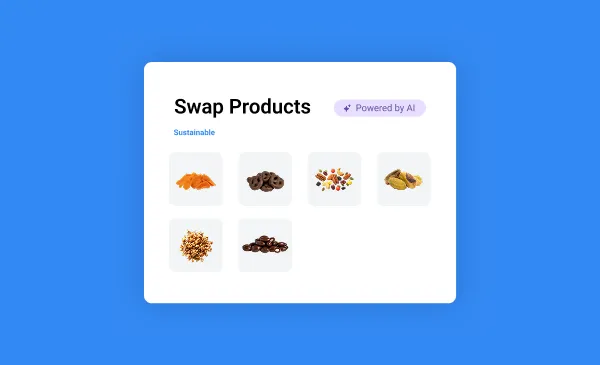
- AI product swap tooling to turn insights into action
Use Product Placement to Control Pantry Spend
THE PROBLEM
Placement can lead to budget overages.
- Lack of expertise leads to poor product placement
- Misplacement drives overconsumption and spend
- Quick fixes often create long-term budget strain
WHAT’S AT STAKE
Overconsumption compounds quietly.
- Small issues scale quickly across locations
- Poor execution blocks long-term optimization
- Inconsistencies inflate costs and weaken experience
THE STRATEGIC FIX
Engineer usage, don't just react to it.
- Place budget-friendly items where eyes land first
- Use aesthetics to create a full look with less product
- Time restocks to control pace and prevent overuse
Tools You Need
Data leads to smart merchandising.
- Subcategory reports to see what drives overuse
- Product-level reporting to pinpoint the specific items
- Real-time budget tracking to see the impact
Four Ways Technology Drives Better Pantry Budget Decisions
1. Visibility
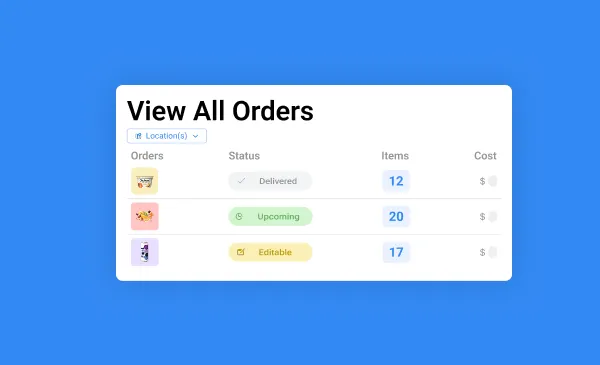
Put budget information at every point of decision, from orders to product swaps, so your entire team stays aligned to your budget priorities.

2. Insights
Dig into category and product-level data to understand exactly what is driving spend and where your dollars are delivering the most impact.
3. Curate
Ensure your technology has built-in tooling to quickly identify optimization opportunities and act on them before they impact your bottom line.
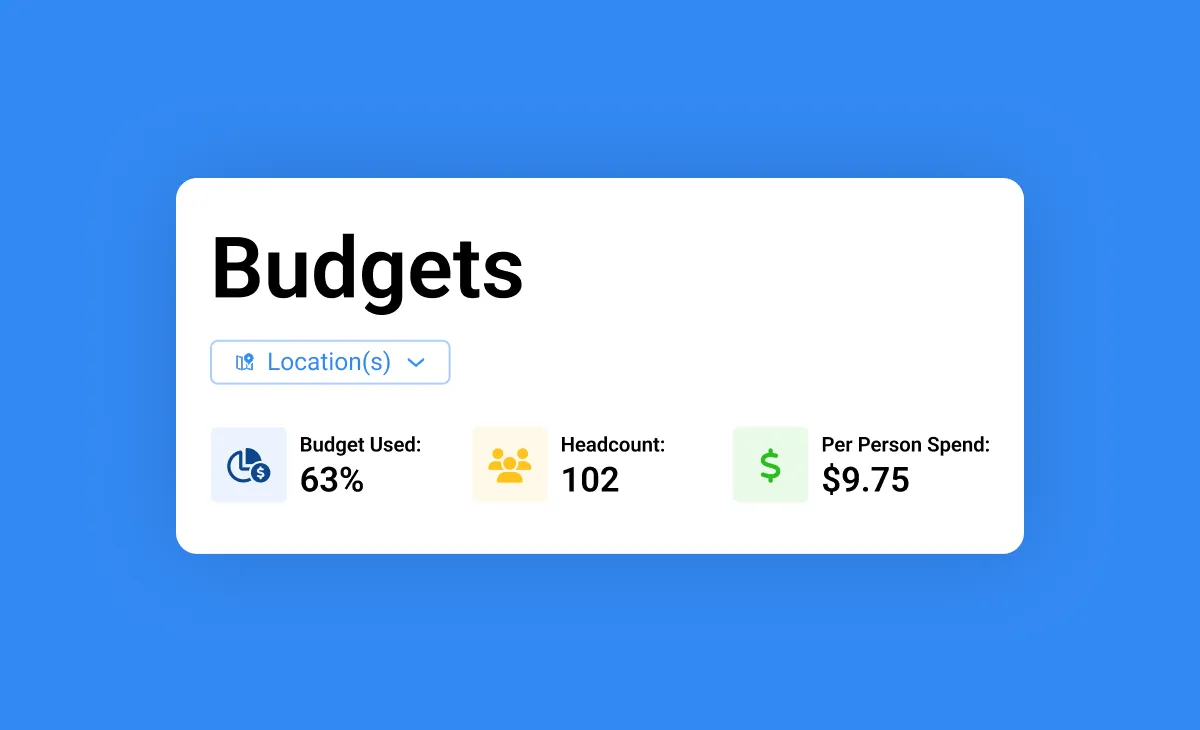
4. Forecast
Leverage historical spend and subcategory trends to plan ahead, anticipate demand shifts, and make proactive adjustments before they become reactive ones.
OPTIMIZE PANTRY SPEND
Why Smarter Pantry Spending Matters
Managing pantry spend goes beyond setting a budget. It requires the visibility, accountability, and operational discipline to ensure every dollar delivers value. Without the right systems, small inefficiencies compound across locations, creating unnecessary costs, wasted resources, and more work for workplace teams.
High-performing pantry programs combine financial oversight, consumption data, and operational expertise to:
- Build accountability into every decision: Establish clear budgets, shared goals, and order-level guardrails that prevent overspending before it happens. Real-time visibility helps workplace teams and Finance stay aligned across every location.
- Optimize spend based on actual consumption: Use product performance data to identify slow movers, eliminate waste, and redirect spend toward products employees consistently choose. More variety doesn't always mean more value.
- Manage consumption through smarter merchandising: Use product placement, inventory levels, and restocking schedules to influence consumption patterns, extend inventory, and protect budgets without compromising the employee experience.
- Scale programs without scaling inefficiencies: Standardize financial controls and operational practices across locations to reduce manual oversight, improve forecasting, and maintain consistent program performance.
The business case for smarter resource allocation is clear:
- 84% of companies are using technology to improve how they allocate resources. (TEKsystems)
- $800 per employee annually can be saved by offsetting snack and beverage costs. (NielsenIQ)
- 3–4x an employee's salary is the estimated cost of replacement versus retention. (SHRM)
The opportunity is to turn pantry spending into a more disciplined, data-driven investment where every product, order, and operational decision contributes to stronger financial performance and a better workplace experience.
3 KPIs to Measure Pantry Spend
The financial baseline for your entire pantry program. You want to be able to track total spend against your set budget each month, so your team always knows where they stand and can make informed decisions before the invoice arrives.
Watch For: Consistent overages in the same month, year over year, or sudden spikes mid-month that signal ordering decisions are being made without budget visibility.
Breaks your monthly budget down to the individual order, so every purchasing decision carries a clear spending target. Turns a monthly number into a real-time operational tool that your entire team can act against throughout the full order cycle.
Watch For: Consistent overages on every order signal that your program may need more resources, a tighter variety, different merchandising, or a swap to more cost-effective alternatives.
Measures how spend, consumption, and program performance have shifted over time, providing the clearest signal of whether your program is improving or drifting. Use these insights to justify investment, identify trends, and shape future decisions.
Watch For: Spikes in headcount or consumption during specific months that were not planned for, and use those patterns to anticipate and budget for peak demand the following year.
Minimize Pantry Waste
Then 2025
The pivot
Waste was a cleanup issue. Many programs without data over-order, under-track, and absorb costs without fixing the root cause.
NOW 2026
The signal
The most effective programs are building programs and management systems that prevent waste before it happens.
NEXT BEYOND
The payoff
Programs built around data, automation, and accountability build credibility that leadership and employees both respect.
Minimize Pantry Waste
Why Pantry Waste Prevention Starts Upstream
Most organizations approach sustainability through the lens of what happens after. Compost programs, recycling initiatives, and packaging audits. These matter, but they address the symptom, not the source.
The EPA estimates that food waste is the single largest category of material placed in municipal landfills, representing nearly 24% of all municipal solid waste. In the workplace, that waste is largely preventable. The most significant and costly form of waste in a pantry program happens in the order that was placed without data, the delivery that was never verified, and the product that sat on the shelf until it expired.
Cleanup is playing defense. Prevention is playing offense.
The shift from reactive to proactive is an operational conversation. Pantries that prevent waste before it happens do not just reduce environmental impact. They protect budgets, build credibility with leadership, and signal to employees that the organization operates with intention at every level.
Technology is the key to making this shift possible. The right platform gives teams visibility into exactly where waste is occurring, accountability to verify that what was ordered actually arrived, and the data to identify opportunities to reduce excess before it accumulates.
Verify Every Pantry Delivery Line by Line
THE PROBLEM
Paying for what never arrived.
- You may be paying for products you never received
- Unverified deliveries lead to silent waste
- If noticed, fixing it drains time and internal resources
WHAT’S AT STAKE
Invisible spend is impossible to justify.
- Economic uncertainty means every dollar counts
- Gaps weaken planning, forecasting, and trust
- Lack of oversight undermines credibility
THE STRATEGIC FIX
Accountability built into every step.
- Build item-level checks into your receiving process
- Centralize verifications for visibility across locations
- Require visual proof to hold partners accountable
Tools You Need
Verification from order to invoice.
- A central inventory system across every office
- Line-by-line verification records for every order
- Centralized billing for easy reconciliation
Automate Restocking With Par Levels
THE PROBLEM
Guesswork that results in waste.
- Most workplaces restock based on feeling
- Restock guesswork results in inconsistencies
- Gaps turn into fire drills that disrupt daily operations
WHAT’S AT STAKE
Overstocked and under-optimized.
- Emergency orders inflate costs and blow budgets
- Teams lose efficiency managing preventable issues
- Overstocked items quietly erode sustainability efforts
THE STRATEGIC FIX
Consumption-driven pantry orders.
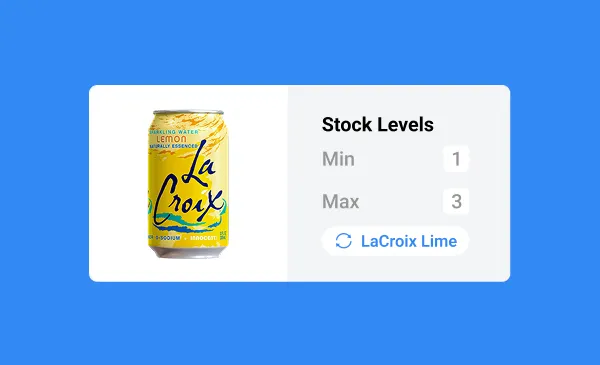
- Set minimum and maximum thresholds for each product
- Automate so this runs without manual effort
- Minimize waste by aligning orders with actual demand
Tools You Need
Precision ordering on autopilot.
- Order automation that triggers based on minimums
- Product performance reports to understand what’s moving
- Employee voting to layer in qualitative demand signals
Switch High-Volume Snacks to Bulk Pantry Products
THE PROBLEM
Bulk potential that never gets acted on.
- Supply chain volatility demands program flexibility
- Overreliance on disposables drives up waste
- Rigid, single-use-heavy models strain budgets
WHAT’S AT STAKE
Visible waste erodes trust fast.
- Unpredictable spend weakens financial control
- Growing waste challenges sustainability credibility
- Inflexible systems make it harder to scale responsibly
THE STRATEGIC FIX
Shift to bulk before the waste adds up.
- Shift high-volume snacks to bulk to cut waste
- Validate drink volume to justify bulk equipment
- Apply across locations to standardize experience
Tools You Need
The data to validate the switch.
- Product-level reports to flag high-volume items
- Subcategory reports to justify the investment of bulk
- Budget savings built into product swap tooling
Four Smart Ways to Reduce Pantry Waste With Technology
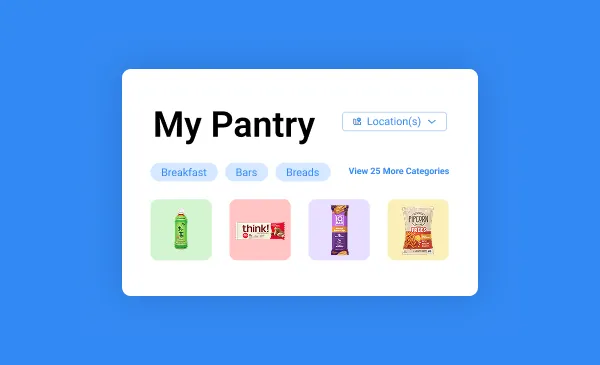
1. Streamline
Centralized inventory gives your team full visibility into what is on the shelf, what is running low, and what has already been ordered.
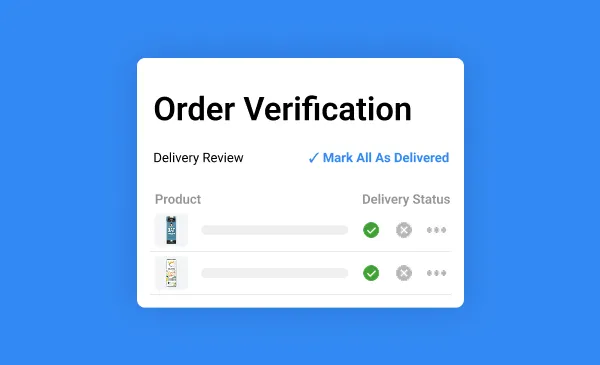
2. Verify
Built-in line-by-line order verification ensures that what was ordered is what arrived, so silent discrepancies don’t creep into your budget.
3. Automate
Smart min and max thresholds trigger replenishment based on real usage data, so your team is never over- or under-ordering.
4. Optimize
Pantry insights surface opportunities to reduce waste, validate bulk investments, and refine your program before the inefficiencies compound.
Minimize Pantry Waste
Why Operational Accountability Matters
A high-performing pantry program depends on more than a strong strategy. It requires the operational accountability, data, and systems to execute consistently, minimize waste, and make responsible use of resources. Without clear verification and accurate demand forecasting, small inefficiencies compound into unnecessary costs, excess inventory, and operational disruptions.
Leading workplace programs build accountability and sustainability into everyday operations to:
- Verify execution at every step: Use delivery confirmations, photo verification, and operational tracking to ensure orders are accurate, services are completed, and resources are accounted for across every location.
- Prevent waste before it happens: Use real-time consumption data, inventory thresholds, and demand forecasting to order with greater precision, reduce overstocking, and minimize expired products.
- Make sustainability part of daily operations: Introduce bulk formats where appropriate to reduce packaging waste, simplify replenishment, and improve cost efficiency without compromising the employee experience.
- Build resilience and long-term value: Establish flexible operating practices that adapt to changing demand, rising costs, and supply chain disruptions while keeping programs consistent and efficient.
- Turn company values into visible action: Align everyday purchasing and operational decisions with sustainability commitments to strengthen employee trust, stakeholder confidence, and organizational credibility.
The business case for sustainable operations is clear:
- 80% of leaders see sustainability as a tool to optimize costs. (Gartner)
- 74% of supply chain leaders expect sustainable practices to positively impact profitability. (Gartner)
- 75% of employees want employers to take action on social responsibility. (IBM)
The opportunity is to make accountability and sustainability measurable parts of pantry performance, reducing waste, protecting resources, and delivering an experience that reflects the organization's values.
3 KPIs to Measure Pantry Waste
Tracks deliveries that are verified line by line at the point of receipt. The most direct signal of whether your accountability systems are actually working or whether discrepancies are slipping through undetected and unresolved.
Watch For: If your provider cannot confirm what was delivered line by line, audit one week of deliveries against your invoices. What you uncover will tell you how much this is costing you.
Measures how each product in your lineup is actually moving relative to what was ordered. Tells you what is earning its place on the shelf and what is quietly sitting, expiring, and adding to waste before anyone makes a change.
Watch For: Products that underperform across multiple order cycles. Identify the slow movers, swap them out with a different flavor or item, and track to see how the new item performs.
Defines the minimum and maximum stock levels for each product based on real consumption data. When calibrated correctly, replenishment runs automatically, and the program stops swinging between over-ordering and running out.
Watch For: If the same products are consistently hitting their minimum threshold before the next delivery, that is your signal to evaluate whether a bulk format makes more sense.
Save Valuable Time
Then 2025
The pivot
Too often, workplace teams accepted the burden of managing it themselves or cleaning up the mess of underperforming partners.
NOW 2026
The signal
Teams are being asked to do more with less, and demanding partners who can offload the operational work and prove program value.
NEXT BEYOND
The payoff
Workplace teams shift from reactive operators to strategic architects, building experiences that give employees a real reason to show up.
Save Valuable Time
Why Wasted Pantry Time Is Wasted Money
Your pantry should empower your team, not exhaust them. When operations are fragmented, workplace teams spend hours reacting to issues and chasing down answers. A successful pantry unlocks more capacity and allows them to focus on the work that actually moves the business forward.
The real cost of a bad pantry system is rarely visible on an invoice. It shows up in the hours spent troubleshooting a missed delivery, reconciling an inaccurate order, or manually tracking down information that a good platform would surface automatically. Bad systems make you pay twice. Once for the program, and again for the time your team spends cleaning up after it.
Every hour spent managing problems translates into a cost your business has to absorb.
The right partner changes that equation entirely. When you can trust that the operational side of your pantry is handled, verified, and visible without your team having to chase it, that time does not just disappear. It gets reinvested. Into better employee experiences, smarter workplace strategy, and the kind of intentional programs that give your team a real reason to show up.
Get Instant Access to Pantry Spend Data
THE PROBLEM
Too much time finding answers.
- Teams waste hours chasing down the numbers
- Delayed data slows decisions and hides issues
- Teams react instead of staying ahead
WHAT’S AT STAKE
Inefficiency drives up operating costs.
- Time spent chasing data drains team capacity
- It pulls focus from priorities and increases burnout
- Results in added support, driving up operating costs
THE STRATEGIC FIX
Technology that removes the chase.
- Use infrastructure that makes data instantly accessible
- Ensure you can filter to the cuts of data you need
- Use historical data to anticipate future demand
Tools You Need
Everything accessible, instantly.
- Centralized inventory, orders, and billing in one place
- Spend reports with location, category, and product filters
- Easy export capabilities across all reports
Delegate Pantry Operations Without Losing Oversight
THE PROBLEM
Operational drag that quietly compounds.
- Daily pantry tasks quietly drain your team’s time
- These tasks pull focus away from strategic work
- Avoidable issues turn into recurring costs
WHAT’S AT STAKE
A team buried in logistics cannot build.
- When teams are buried in logistics, experience suffers
- Engagement programs fall behind or lose momentum
- Turnover increases and rehiring eats at your bottom line
THE STRATEGIC FIX
Delegate without losing control.
- Delegate pantry operations to increase bandwidth
- Put tools in place to maintain oversight
- Use tech to verify execution across locations
Tools You Need
Oversight without the overhead.
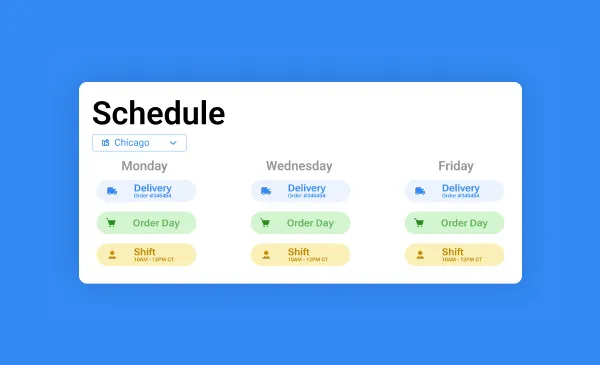
- A central pantry schedule with itemized tasks and priorities
- Real-time status updates across all tasks at all offices
- Photo proof of all tasks completed across offices
Prevent Pantry Issues With Proactive Alerts
THE PROBLEM
Reactive systems that drain the day.
- Minor issues spiral into hours of manual follow-up
- Operational noise drains your team’s capacity
- High-impact initiatives lose momentum
WHAT’S AT STAKE
Strategic work will always lose.
- Time lost on tasks means strategy gets sidelined
- Your best people are not reaching their full potential
- Performance, morale, and credibility take a hit
THE STRATEGIC FIX
Proactive operations at every level.
- Use system-driven workflows to prioritize your efforts
- Build visibility into what’s done and what’s next
- Integrations into workflows with clear action items
Tools You Need
Innovative tools that keep you ahead.
- Clear priorities outlined for every pantry shift
- A responsive support center with real-time status updates
- Notification integrations into Slack, email, etc.
Four Ways to Eliminate Time-Consuming Pantry Tasks
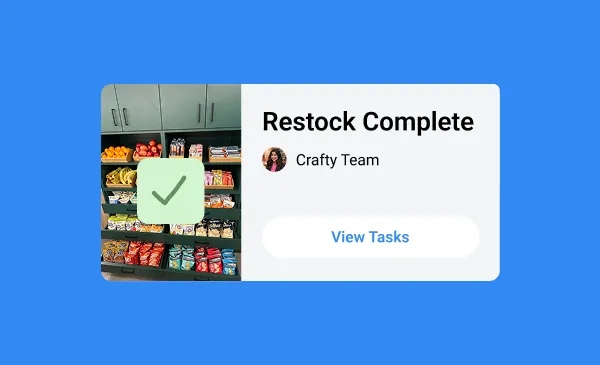
1. Execution
Expert-led execution across offices so your team never has to manage the details or wonder if the pantry is running as it should.
Save 23 Hours per Week
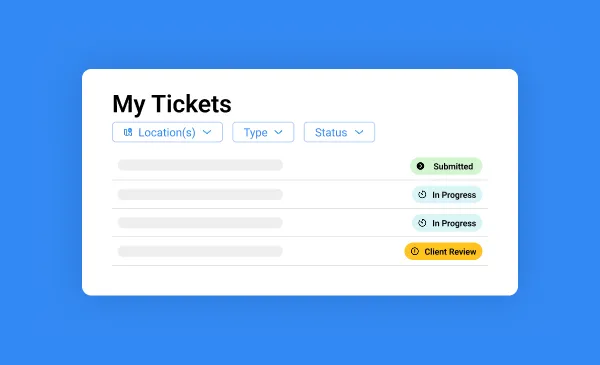
2. Transparency
Real-time visibility into every location so you always know what is done, what is in progress, and what needs attention.
Save 8 Hours per Week
3. Support
Responsive support with real-time status updates so every issue is tracked and resolved without your team chasing it down.
Save 3 Hours per Week
4. Reporting
On-demand reporting that gives instant access to the data needed to track performance and prove program value.
Save 1 Hour per Week
Save Valuable Time
Why Operational Efficiency Matters
Time is one of the most valuable resources in any workplace, yet it's often overlooked when evaluating pantry performance. Pulling reports, reconciling invoices, managing inventory, and resolving service issues create hidden costs that compound across locations. High-performing programs reduce this operational burden by giving workplace teams the visibility, tools, and support to make faster decisions and focus on higher-value work.
Leading workplace programs combine real-time intelligence, clear accountability, and expert service to:
- Turn data into faster decisions: Access, filter, and compare financial and operational data in real time to identify opportunities, resolve issues, and optimize performance without chasing reports or consolidating spreadsheets.
- Reduce the burden of daily operations: Delegate ordering, restocking, equipment care, and issue resolution to experienced partners with the systems and expertise to execute consistently.
- Build visibility into every task: Track onsite activity, verify completed work through photo documentation, and monitor service performance across locations without constant follow-ups.
- Prevent issues before they consume time: Use inventory data, proactive service processes, and automated notifications to address needs early, reduce disruptions, and eliminate repetitive manual work.
- Reinvest time in strategic priorities: Standardize workflows and simplify oversight so lean workplace teams can manage growing programs without adding operational complexity.
The cost of lost productivity is significant:
- 2.4 billion hours annually are lost to out-of-office coffee and snack runs. (Staples)
- 30% of the average workday, or approximately 2.5 hours, is spent searching for information. (IDC)
- 35 hours per week can be spent manually managing a single pantry location. (Crafty)
The opportunity is to make operational efficiency a measurable business outcome, giving workplace teams more time to focus on employee experience, strategic initiatives, and the work that drives the business forward.
3 KPIs to Measure Pantry Time Savings
Tracks the percentage of prioritized pantry tasks completed across every location. It’s a clear signal of whether your operational systems are executing as designed or whether gaps are forming that your team will eventually have to absorb.
Watch For: A completion rate that consistently falls below target signals a need to reassess both the service frequency and the task list itself. You may need to compromise on one.
Gives workplace leaders a structured way to rate service quality over time and communicate progress back to their partner. A consistent feedback loop that ensures the program is always improving and that service gaps are surfaced and addressed before they become patterns.
Watch For: If your provider does not have a built-in mechanism for rating service and tracking satisfaction over time, you have no way to hold them accountable or drive improvement.
Measures the time your team gets back when pantry operations run the way they should. Tracks the reduction in hours spent on manual tasks, issue resolution, reporting, and operational follow-up, so the value of a well-run program shows up in more than just the experience.
Watch For: If your team is spending more time on pantry management, it is a signal that something in the operational model has broken down and needs to be reassessed.
CONCLUSION
How to Build an ROI-Driven Office Pantry Program
Every strategic decision is a balance of tradeoffs: time, capital, and focus. In a world where every investment is scrutinized, the way you manage your workplace experience sends a message. The pantry may seem like a small part of your business, but it’s a very visible reflection of your company’s values, priorities, and operational precision.
This playbook is about learning how to remove friction in a place that touches every employee, every day, and turning it into a competitive advantage that yields better outcomes across your entire business.
When you incorporate the strategies outlined in this playbook, you’re not just fine-tuning a perk, but you’re unlocking real, measurable ROI. You spend smarter. You waste less. You give your team time back. And most importantly, you turn your workplace experience into a lever that drives retention, performance, and trust.
That’s not just a better pantry program; it’s better business.
A pantry program you cannot see is a program you cannot manage. Real-time visibility into spend, consumption, and operations gives workplace leaders the confidence to make informed decisions, identify inefficiencies, and protect their investments.
The strongest programs treat visibility as essential business infrastructure. When teams can track performance, align resources with actual demand, and measure results across locations, they gain the intelligence to make faster decisions and demonstrate measurable ROI.
Every issue your team scrambles to fix carries a cost in time, money, and resources. Small inefficiencies compound quickly when programs rely on reactive decisions, turning preventable problems into recurring operational expenses.
High-performing programs anticipate demand, identify budget risks, and address operational gaps before they escalate. With the right systems in place, teams can prevent unnecessary costs, protect resources, and maintain consistent performance without constant intervention.
Even the best pantry strategy falls short without consistent execution and oversight. Clear ownership, real-time verification, and measurable service standards ensure every location delivers on expectations and every resource is accounted for.
Building accountability into daily operations gives leadership confidence that investments are delivering as intended. Verified deliveries, documented service completion, and transparent performance tracking create the operational discipline required to scale without sacrificing quality.
Data creates value when teams can act on it. Technology embedded into everyday workflows connects insights directly to decisions, eliminating manual effort and ensuring opportunities for improvement don't get lost between reports and execution.
Automation, timely notifications, and intelligent recommendations put the right information in front of the right people at the right moment. This enables teams to make faster decisions, continuously optimize performance, and achieve more without adding resources.
See These Strategies in Your Pantry
Budget tracking, order verification, slow-mover insights, and task oversight, all in one platform. Get a walkthrough built around your program.


