min read
March 11, 2026
Data Bites: The Top Office Drinks and Coffee of 2025
Crafty’s proprietary workplace pantry data reveals the most popular drinks employees are reaching for in their office beverage stations.

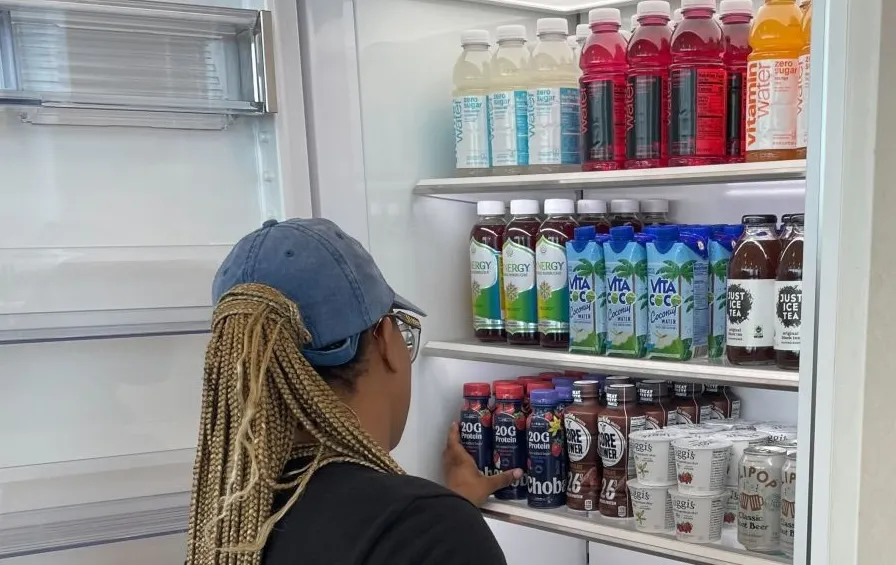
The office drinks employees reach for throughout the workday reveal a lot about how teams fuel productivity. From morning coffee to afternoon hydration, beverage choices reflect what people need to stay energized, focused, and performing at their best.
Using consumption data from Crafty-powered pantries, we analyzed which drinks employees actually choose from the office beverage station, and the results highlight a clear shift in workplace beverage habits toward functional options.
This pantry data analysis reflects 2025 workplace pantry data. For the latest benchmarks and market insights, explore the Crafty Pantry Intelligence Index.
Top Office Drinks and Coffee of 2025
Office beverage programs are evolving fast. While classic staples like soda and coffee still anchor the workplace pantry, employee demand is expanding toward drinks that support better hydration, sustained energy, and better performance throughout the day.
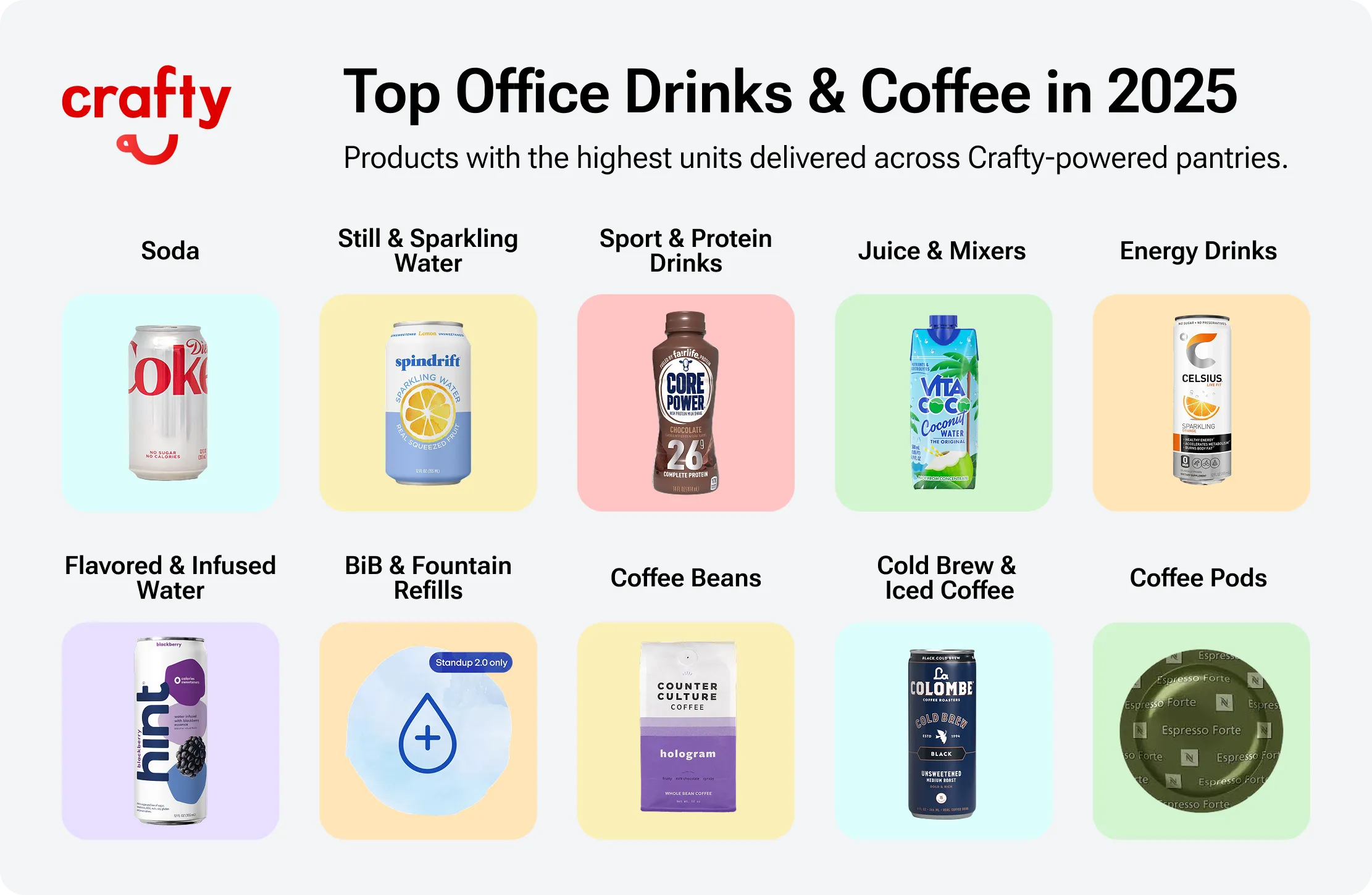
Here’s what topped the charts by category:
- Soda: Diet Coke
- Still & Sparkling Water: Spindrift Lemon Sparkling Water
- Sport & Protein Drinks: Core Power Chocolate Protein Shake
- Juice & Mixers: Vita Coco Coconut Water
- Energy Drinks: Celsius Sparkling Orange
- Flavored & Infused Water: Hint Blackberry Water
- BiB & Fountain Refills: Crafty Beverage Dispenser Refills
- Coffee Beans: Counter Culture Coffee Hologram Blend
- Cold Brew & Iced Coffee: La Colombe Cold Brew Black
- Coffee Pods: Nespresso Espresso Forte
What This Says About Employee Beverage Preferences
Employee beverage choices across the US reflect a sense of balance throughout the workday. People are not reaching for the same type of drink every time. Instead, they are matching their mood, energy levels, and goals to what will support them in the moment. Sometimes that means hydration, sometimes it means caffeine or protein, and sometimes it is simply a familiar favorite.
Three key beverage trends stood out in 2025:
- Don't count out the classics.
Even with new categories growing quickly, traditional drinks remain foundational. Soda still represents 21% of pantry beverage spend, with sparkling water close behind at 20%, showing that familiar favorites continue to anchor the office beverage program. - Hydration is becoming the new baseline.
Still and sparkling water consumption increased 97% year over year, reflecting a major shift toward drinks that support everyday hydration. Employees are choosing beverages that keep them refreshed and focused without relying heavily on sugar or caffeine. - Function-forward drinks are gaining momentum.
Employees are increasingly reaching for beverages that do more than quench thirst. Sports and protein drinks grew 64% year over year, as teams look for options that help sustain energy, support recovery, and power through busy workdays.
How Workplaces Can Apply These Insights
Turning beverage data into better decisions requires the right visibility and tools. When workplace teams can clearly see what employees are choosing and how those patterns shift over time, it becomes much easier to optimize the beverage program without guesswork.
Three data points you need to make smarter decisions in your office beverage program:
- Product performance reporting: Clear product-level reporting shows which drinks employees are gravitating toward and which ones are being left behind. This visibility helps teams quickly identify top performers, remove low-impact items, and continuously refine the beverage assortment based on real behavior.
- AI-powered product recommendations: When a drink underperforms, AI-powered recommendations can suggest similar alternatives that align with your goals. These suggestions factor in category preferences, employee demand, and budget impact so teams can experiment with new options while maintaining pantry cost control.
- Subcategory-level reporting: Category and subcategory insights help teams see the bigger picture of beverage spend and allocation throughout the year. This makes it easier to adjust the mix seasonally, such as increasing cold beverages during warmer months and prioritizing hot coffee and tea options during colder seasons.
Conclusion
The drinks employees choose throughout the workday offer a clear signal of how they stay energized, hydrated, and focused. From coffee that fuels the morning to hydration and functional beverages that carry teams through the afternoon, workplace beverage stations are becoming a reflection of how employees manage their performance and well-being at work.
For workplace leaders, the opportunity is to respond to those signals. With the right data and tools, teams can continuously refine their beverage mix, align offerings with employee needs, and turn the office beverage station into a program that supports both productivity and experience.
Dive into the latest data inside the Pantry Intelligence Index.
Related Resource

Blog
Equipment Guide: The Best Office Coffee Machines for Your Team
October 22, 2026

Blog
Best Low Carb Snacks for the Office Pantry
October 21, 2026

Blog
Office Pantry Services in Texas: How Crafty Is Growing Across Dallas, Austin & Houston
October 15, 2026

Blog
What Makes Fruit “Office-Ready”? From Farm Selection to Delivery Standards
October 15, 2026
Blog
The Procurement Guide to Evaluating Office Pantry Providers
October 14, 2026

Blog
Equipment Guide: Sparkling Water Machines for the Office
October 14, 2026

Blog
Best Organic Office Snacks: What to Stock and How to Read the Labels
October 13, 2026

Blog
Data Bites: Office Pantry Spend Per Employee by Industry in 2026
October 13, 2026
Blog
Inside Office Digest: How Crafty Measures Office Pantry Program Performance
October 12, 2026
Blog
Equipment Guide: Cold Water Machines for the Office
October 8, 2026